Endurance events are becoming a new kind of travel goalEndurance events are becoming a new kind of travel goal
Inside the ‘darecation’: Why travellers are choosing holidays that hurt
 Getty Images
Forget relaxing on holiday; more travellers opting for physically punishing adventures in some of the world’s toughest places.
For Sara Storey, the World’s Highest Marathon offered a chance to do something nobody had attempted before.
“I’ve done quite a few ultramarathons and multi-day races, some of them quite tough, but I’d never experienced an event where so much effort was required even to get to the start,” she said.
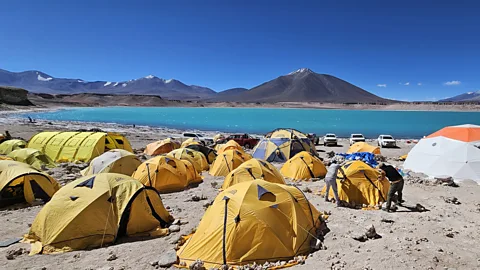
She was one of 16 runners who signed up for the World’s Highest Marathon in Chile earlier this year. The 26.2-mile (42.195km) race began on Ojos del Salado, the highest volcano in the world, at an elevation of 6,893m (22,615ft). In extremely low oxygen, temperatures of -30C and winds up to 100km/h (62mph), participants first had to climb for around 11 hours just to reach the start line. Only five made it there – and then came the small matter of completing a marathon at altitude.
“Altogether, I was moving for nearly 30 hours,” she said. “It took so much out of me. I feel that in the battle between the volcano and me, it was a draw, because I’ve never been so close to my physical limits as I was then. Having said that, would I do it again? Absolutely. I want people to see what an ordinary 47-year-old woman can do when she puts her mind to it.”
 World’s Highest Marathon
Storey is one of a growing number of people seeking not just thrills on holiday, but trips that test them. It’s an increasingly visible theme in travel. Earlier this year, Pinterest identified “darecations” as one of their top trends for 2026, reporting a 75% increase in searches for adventure tourism and forecasting a boom in “full-throttle, adrenaline-inspired tourism” among Gen Z and Millennials. Sports insurance provider SportsCover Direct, meanwhile, has seen an 182% increase in travellers taking out sports travel insurance over the past two years, with particularly strong growth in trekking, mountaineering and marathon-related travel.
What is an ultramarathon?
An ultramarathon is a foot race with a distance longer than a traditional marathon (26.2 miles or 42.195km). While 50km (31-mile) races are often seen as the gateway to the sport, distances vary hugely, as do terrain and setting.
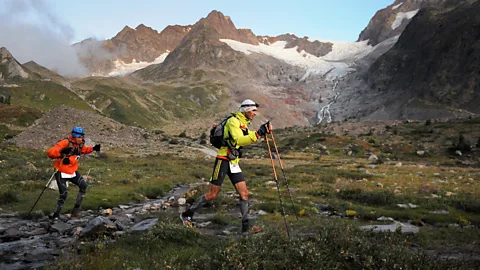
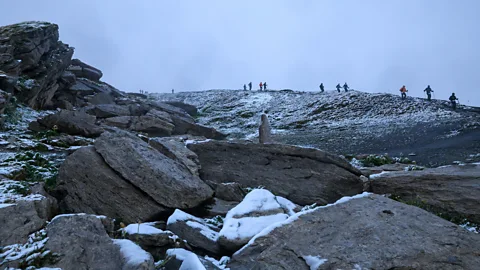
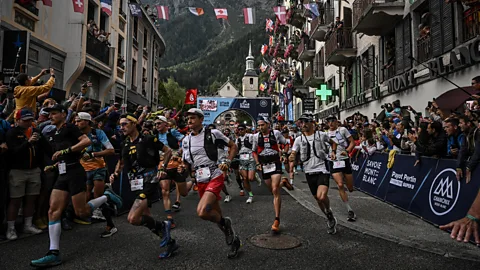
At UTMB World Series, one of the world’s leading organisers of trail running and mountain races, business is booming. Since launching with a single race around the Mont Blanc Massif in 2003, it expanded to 25 ultramarathon events in 2022 and now hosts more than 60 races globally. Annual participation has risen from 50,000 in 2022 to 170,000, most of whom aren’t elite athletes but highly committed amateurs.
“People become engineers of themselves for these races,” said Florian Lamblin, executive director of UTMB International and an ultrarunner himself. “They are trying to achieve something complex and, at the end, deliver something extraordinary, which is running up to 30 hours in nature.”
British mountaineer Gavin Bate, founder of specialist adventure travel firm Adventure Alternative, led the logistics for the World’s Highest Marathon. He sees the rise of this kind of travel among non-professional athletes as partly a reflection of advances in training and sports nutrition. But he also believes something deeper is at work.
 UTMB World Series
“It’s about connection with nature – for a lot of people, the gym environment doesn’t really cut it,” he said. “We are living in a world… where we understand the benefit of a connectedness with nature. Many people working in the outdoor adventure sector are experiencing a tsunami of people coming to engage with these activities for mental health reasons.”
He also points to Comic Relief’s celebrity challenges as one reason why extreme adventures have become more visible. By bringing these feats into people’s living rooms, he says, they are normalising the idea of enormous physical challenges.
“In 2009 when Chris Moyles summited Kilimanjaro for Comic Relief, you would not believe how many people were calling into our office wanting to do it,” he said. “In his own words, he was overweight and a smoker. People felt that if he could do it, then they could too.”
More like this:
Just as Comic Relief has shifted from classic epic treks like Kilimanjaro to Sara Cox’s extreme ultramarathon and Greg James’ 1,000km bike ride, extreme travel has evolved, too. Today, examples include ultramarathons, where the distance exceeds the typical marathon length, often by a significant margin, and trail running in punishing environments. Because of the distances involved, participants may need to carry their own equipment, camp enroute or cope with weather or altitude as part of the challenge.
 Getty Images
Sports psychologist Dr Josephine Perry, who works with extreme endurance athletes, calls them “organised adventures”. She sees them as a natural progression as runners move from marathons to triathlons, Hyrox competitions and then ultramarathons. The type of people attracted to them, she says, fall into two camps.
“There are those who love running and want to be outdoors doing it,” she said. “Then there are those who are very good at running but find the focus on perfectionism in road running dull.”
She said that the variable nature of ultramarathons and trail races mean that they cannot be reduced to times and splits in quite the same way as road races, making them more interesting for many participants.
“The ultimate gain at the end is not speed-related metrics: it’s about how cool the course was, what you saw along the route and the stories and adventures you bring back,” she said.
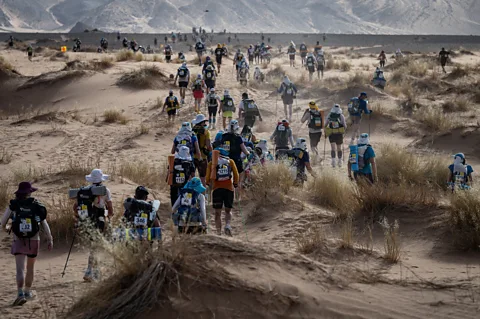
For anyone interested in taking an extreme adventure, there is no shortage of options. One of the oldest and best known is the Marathon des Sables, the iconic multi-day desert race in Morocco, which marked its 40th edition in 2026. The event covers 251km (156 miles) over roughly six days through the Sahara. It’s not the only adventure race run by the organisation: there are now 10 further Marathon des Sables races in destinations including Namibia and Jordan, all featuring the signature multi-day extreme physical challenge adventure in wild scenery where limits are tested in a backdrop of shifting sand dunes and desert wildlife.
 Getty Images
Then there’s the extreme challenge of the Barkley Marathons in Tennessee, widely known as “The Race That Eats Its Young”. One of the world’s strangest and most brutal ultramarathons, the unmarked race sends runners through punishing terrain with only a map and compass, and it’s common for nobody to finish. Shrouded in secrecy and myth, Barkley has become legendary in endurance sports culture.
In Europe, the annual Ultra Trail de Mont Blanc allows you to clock up three countries in a 171km (106 mile) race around the Alps. Others push the format into stranger terrain: The World’s Deepest Marathon took runners through a zinc mine in Sweden in 2025, while The World’s Highest Marathon will return in 2027, this time in Bolivia. You can even run a marathon on Everest, following a route that begins at Everest Base Camp and leads through the Sherpa trails of the Khumbu Valley. For those chasing something longer still, the Iditarod Invitational includes a 1,000-mile (621km) winter route across the Alaskan wilderness.
For marathon runners and super-fit adventurers, it seems that nowhere on the planet is too remote to have an extreme adventure. The only question is whether you’re tough enough to take it on.
—
If you liked this story, sign up for The Essential List newsletter – a handpicked selection of features, videos and can’t-miss news, delivered to your inbox twice a week.