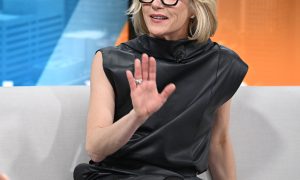
The rise of body scrutiny is a sign of something much darker, Brittney McNamara writes.The rise of body scrutiny is a sign of something much darker, Brittney McNamara writes.

On Instagram last week, Anne Hathaway addressed the conspiracy-minded comments: “Fake hair, real bump,” she wrote.
Pregnant with her third child while on a press tour spree, the actor wore one of many belly-baring ensembles on a red carpet event—and a flood of questions (and implications that it wasn’t real) ensued. Hathaway is just one of many celebrities facing overwhelming body scrutiny online within the last month. Kate Beckinsale was accused of having an eating disorder by commenters who claim her grief-fueled weight loss had gone too far. Jenna Ortega is facing backlash after appearing in an Esquire video, as viewers say she looks too thin. And of course, Ariana Grande announced a retreat from public life, citing intense criticism around her appearance.
The 2000s were filled with sometimes-anonymous conversations about women’s bodies, which seemed to momentarily quiet with the body positivity and #MeToo movement. But body talk has once again taken center stage again with the rise of weight loss medications that have made thinness more accessible than ever.
But it’s not just celebrities whose bodies are under the microscope: The rise of body scrutiny is one element of a growing socio-political environment where women’s bodies are being constantly surveilled, threatening everything from our conceptions of health and beauty to our careers and our very freedom.
Abortion surveillance is what the CDC calls tracking abortion data, a longstanding, helpful practice to understand the broader state of abortion care. Schwartz’s promise seems to extend beyond simply collecting data, though. “I also want to make sure that certain states are not conflating emergency services and hiding abortions in that emergency services case definition,” Schwartz said. Even states with near-total abortion bans allow for emergency care if the pregnant person’s life is in danger. Schwartz’s implication that some of this emergency care might be code for an abortion by choice goes against what we know: women have died waiting for emergency abortion and miscarriage care as doctors scrambled to figure out whether their case was serious enough to be classified as an exception to their state’s abortion law.
As critiques of women’s bodies grow louder, so too do the consequences we face for not conforming to the increasingly strict regulations around what we are and aren’t allowed to do with them. But while the body police showed up virtually to criticize celebrities, we’ve left the door open for the literal policing of women’s bodies, the kind that could end in jail.