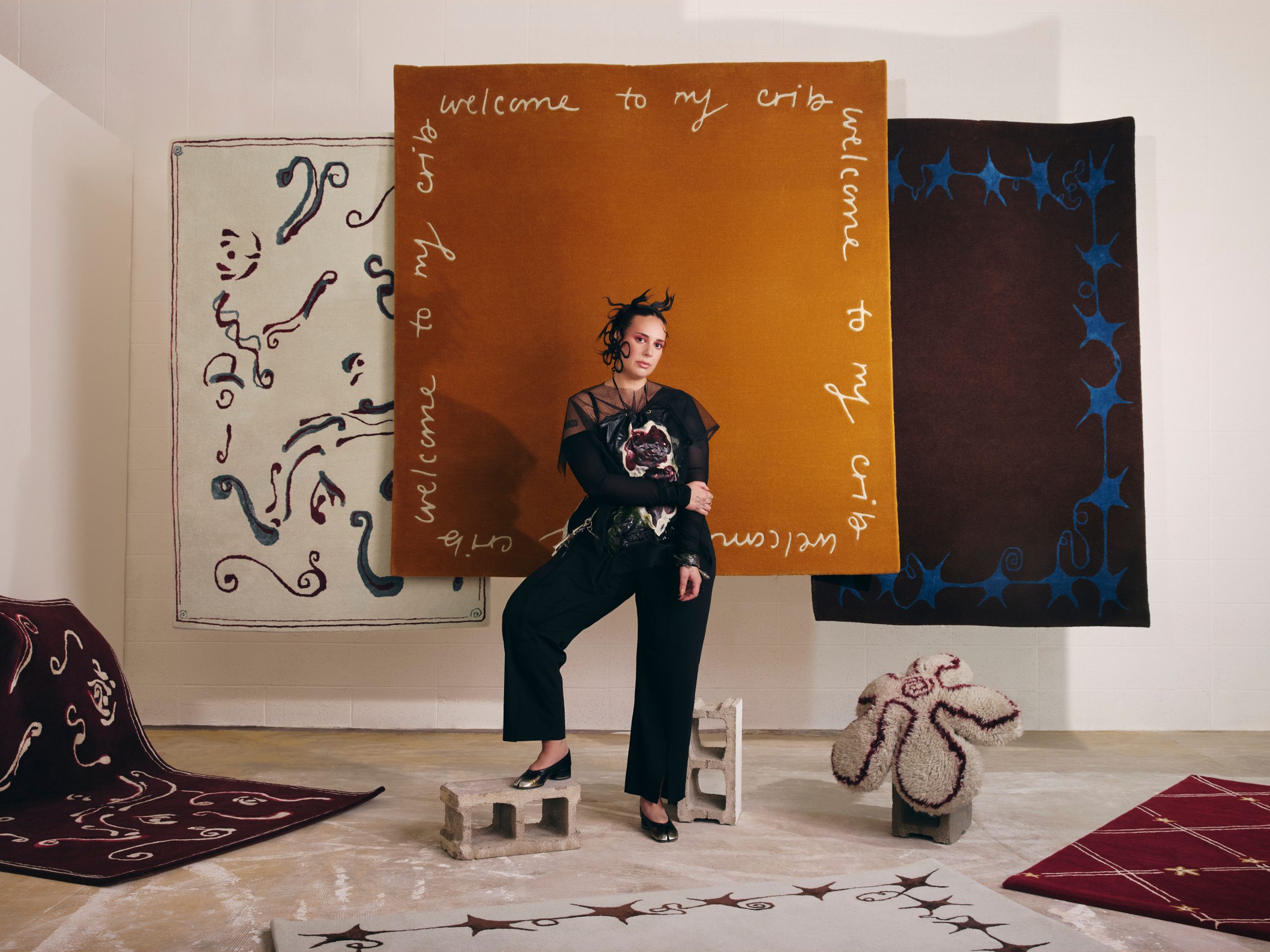
Canadian artist Rashelle Campbell began making her rugs during Covid as a way to spark joy back into her home. Her new collection of handmade pieces is ready to enliven any space.Canadian artist Rashelle Campbell began making her rugs during Covid as a way to spark joy back into her home. Her new collection of handmade pieces is ready to enliven any space.

Back in 2020, at the peak of the Covid lockdowns, we were all searching for one simple thing in our lives: joy. That quest to spark happiness during challenging times is precisely what inspired the textile artist Rashelle Campbell to start making her now-signature rugs.
At the time, Campbell—who is Indigenous (Nehiyaw Iskwew/Cree) and based in Edmonton, Alberta, but from the Bigstone Cree Nation in Wabasca—was working in PR and photography, but found herself increasingly obsessed with the world of interior design. (We were, after all, stuck inside our homes.) “That was such an important time of putting love into our homes,” says Campbell. “I really wanted a rug, but I couldn’t find any that I was envisioning in my head.”
Eventually, Campbell purchased a rug tufting gun and began to experiment with making her own. One of her first creations was a Flubber rug, a floral-shaped covering that comes in groovy shades of oranges, pinks. greens, and more; She began posting them on Instagram, and quickly found a customer base who longed for such quirky pieces, too. “My friends really loved it, and from there, it really grew and expanded,” says Campbell, who ended up selling them via retailers such as SSENSE. “I’m known for really bold, colorful pieces.”

These days, Campbell has expanded her brand, Rashelle, into a destination for upbeat home items. Her rugs continue to be her most popular offerings: The colorful designs are made of New Zealand wool, and some are complete with silk-bamboo detailing. “Every piece that I make, I envision in my childhood bedroom,” says Campbell of her design inspiration. “Your imagination could flow in that room—you felt comforted and safe, and there was no limit on your creativity.”
In her newly dropped Homecoming collection, Campbell introduces three new rug styles that will instantly inject any space with personality. The Swirly Star rug, for one, is inspired by her Cree heritage, and features a cartoony star print along the outer border. “Cree people were known as star people,” says Campbell. “I wanted to incorporate that with all of the stars holding hands, to symbolize we’re all in this together.” Her Princess Script rug, meanwhile, is more abstract, featuring vibrant splashes of doodle prints, while her Welcome to My Crib rug plays off the infamous 2000s MTV show tagline.

To showcase the new textiles, Campbell also shot a new campaign series that features herself at the forefront of her creations—a first for the artist, who typically stays behind the scenes. “I really wanted the photos to encapsulate the experience of being a small, woman-owned business,” she says. “To celebrate being a Native woman that is trying to create pathways, where we also belong in a seat at the table—not just Indigenous spaces as well.”