Kareem Rahma was frustrated. Riding high on the success of Subway Takes, a show that has seen the likes of Cate Blanchett, Lil Nas X and Ramy Youssef give hot takes on a train, he was supposed to be taking a victory lap after he scored a major television deal for his other show, Keep […]Kareem Rahma was frustrated. Riding high on the success of Subway Takes, a show that has seen the likes of Cate Blanchett, Lil Nas X and Ramy Youssef give hot takes on a train, he was supposed to be taking a victory lap after he scored a major television deal for his other show, Keep
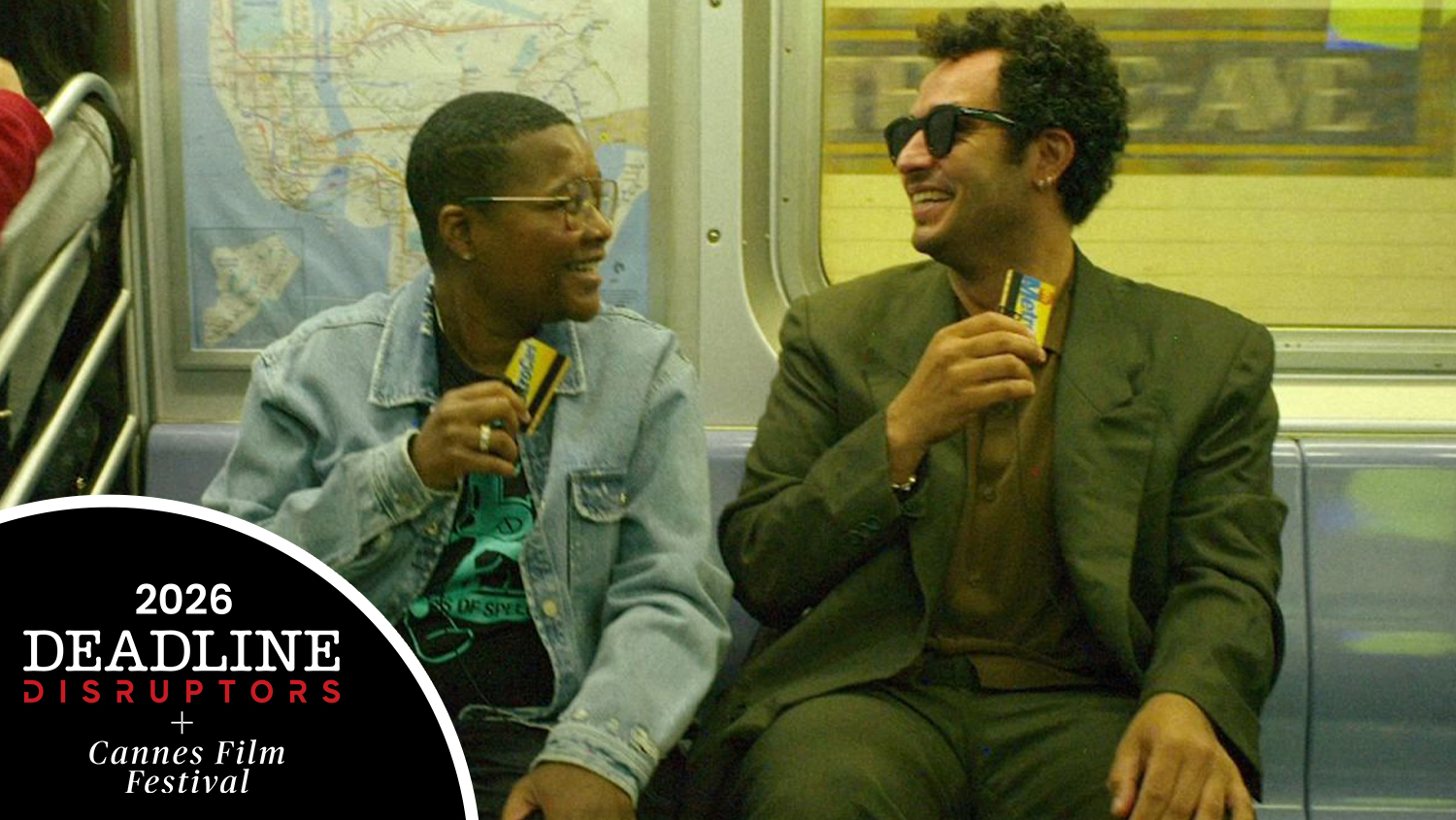
Kareem Rahma was frustrated.
Riding high on the success of Subway Takes, a show that has seen the likes of Cate Blanchett, Lil Nas X and Ramy Youssef give hot takes on a train, he was supposed to be taking a victory lap after he scored a major television deal for his other show, Keep the Meter Running.
But CNN had kept that show — in which Rahma asks New York cab drivers to take him to their favorite places — in development for three years, with no sign of making it to their final destination.
“I did the whole rigmarole with television, and it was a disaster,” Rahma says. “I don’t want to wait anymore. I walked away from the deal and decided to do it independently on YouTube.”

And that’s exactly what he’s done: Rahma is launching a long-form version of Keep the Meter Running at YouTube’s upcoming Brandcast Upfront.
Watch on Deadline
The series will feature nine episodes shot around New York City and one internationally. He says that he has more flexibility than he would have had on CNN, which required each episode to be 45 minutes.
“Some episodes are 45 minutes, and some episodes are 12 minutes — we’re not really concerned with having an exact runtime. It’s more about the story and what is the best we can do for the audience. I was literally fishing with a Korean man in the forest yesterday,” he adds.
Rahma is one of a number of digital natives making a name for themselves on YouTube alongside the likes of Hot Ones’ Sean Evans, Feeding Starving Celebrities’ Quenlin Blackwell, Royal Court’s Brittany Broski and Chicken Shop Date’s Amelia Dimoldenberg.
Many of these creators are producing shows that share their DNA with traditional television.
Julian Shapiro-Barnum had dreams of being part of the traditional entertainment industry when he was studying theater acting at Boston University. But when the pandemic began, he funneled his creative energy into posting videos of himself interviewing children on YouTube.
That video led to Recess Therapy, which has received millions of views featuring the likes of Ben Affleck and Rihanna. After a couple of years, Shapiro-Barnum met with broadcasters and streamers about adapting the show.
“It didn’t go anywhere, but it wasn’t devastating,” he says. “It felt like the industry wasn’t ready.”
Shapiro-Barnum subsequently teamed up with Benj Pasek and Justin Paul, the EGOT-winning team behind the songs from The Greatest Showman, to create another YouTube show, Celebrity Substitute. That show is about to enter its third season and has received over 500 million views.
“I feel like YouTube has gotten to this amazing place where we are just making the TV ourselves,” he says. “We’re not waiting on anybody to open any door for us or unlock any budget, we’re going to brands with an idea, getting it funded ourselves and are in production within less than a year of coming up with it.”

In June, Shapiro-Barnum will launch his most ambitious YouTube project to date: Outside Tonight. The show, which launches in June, will see Shapiro-Barnum conduct interviews in public parks and on street corners and will feature games, live music and comedy. It is essentially the first late-night variety show designed specifically for YouTube.
Shapiro-Barnum calls it a “democratized” version of late-night. “I don’t think this show could work on another platform. If you want to watch SNL or [Jimmy] Fallon, you go to YouTube. People are already reappropriating their content to be on YouTube, that’s where the eyeballs are. We’re cutting out that middleman. We’re making it for the platform that it’ll end up on and being purposeful like that creates better work.”
Brittany Broski has interviewed the likes of Harry Styles and Charli XCX on her Royal Court show, which she describes as a cross between Game of Thrones and Hot Ones. “We’re in a new, exciting era of talk shows right now. We’re watching the demise of Hollywood and the influx of new Hollywood,” she says.
Old Hollywood is also trying to become new Hollywood. Mark Wahlberg recently launched the 4AM Club Challenge on YouTube, late-night hosts such as Trevor Noah and Ziwe are premiering new titles on the platform, and Phil Rosenthal is moving his Somebody Feed Phil series there from Netflix.
Traditional producers are also looking to find a way to make YouTube-specific content. The Challenge producer Bunim/Murray recently launched The Confessional on the Google-owned platform.
The series, which is based on the confessional box that it used in the very first season of The Real World in 1992, sees people share their secrets outside of events such as Coachella as well as on university campuses.
“We were brainstorming concepts that could just really live in the YouTube space that were original and that really felt like an extension of our brand,” President and CEO Julie Pizzi says. “Our goal in this is to continue to introduce new viewers to unscripted formats.”
As the established entertainment industry figures move into the new world, many of the most successful digital creators have also entered the traditional universe. The likes of kids presenter Ms. Rachel, former NASA engineer Mark Rober and Alan’s Universe creator Alan Chikin Chow have all started working with Netflix after breaking through on YouTube.

Amazon
Jimmy Donaldson — the world’s most successful creator — who goes by the name MrBeast, is also behind the biggest unscripted series on Amazon: Beast Games. Donaldson says that making Beast Games made him think differently about his own YouTube content.
“I would almost say sometimes to a bad degree,” he says. “After the first season of Beast Games, we might have made our YouTube content a little too overproduced, where it felt inauthentic, which we’re curving back and fixing. It definitely had a big impact; how do you put on arguably the largest unscripted show in history and not take away learnings over to the other content you make?”
Donaldson has a sign in his North Carolina studio that reads, “Rule #1: YouTube First.”
YouTube CEO Neal Mohan says that for these creators, the platform is “home base”.
“MrBeast can do a deal for a TV show, but he knows his brand, his business, and his community are built on YouTube,” notes Mohan.
Mohan says this is the reason that talent from traditional media is moving to the platform.
“They want to be entrepreneurs, own their work, and have a direct relationship with an audience. We give them that freedom,” he explains.
Netflix, in particular, has been vocal about the rivalry, with Co-CEO Ted Sarandos calling YouTube a “little bit of a farm league” that is useful for creators to “cut their teeth on”.
But YouTube has continued to grow, taking a 12.5% share of TV and streaming in January 2026, per Nielsen’s The Gauge report, up from 10.8% in the same period in 2025, while Netflix only grew from 8.6 to 8.8%.
Yet the company does have its own issues to handle. Rivals say its content is low-quality, and it is aware that it needs to ensure its platform isn’t overrun by AI slop. It also faces questions around moderation, particularly involving misinformation, and it recently lost a court case where a jury found that its features were addictive and caused a user mental health distress, a move that could open the door to more lawsuits.
Mohan, however, is confident that its creators, not the studios, networks or tech companies — will be the ones who “redefine entertainment for the next generation.”
“That’s the beauty of YouTube,” he says. “My job isn’t to predict what content will be front and center in three years. It’s to make sure that when the next creator has a brilliant idea, they have the tools to share it with the world.”