The surprising ways supporters are making the World Cup costs workThe surprising ways supporters are making the World Cup costs work
Insane costs and ‘luck in many ways’. What it’s really like to attend the World Cup
 BBC/ Serenity Strull/ Getty Images
Record-setting ticket prices shut many football fans out of this year’s tournament. We asked four groups who actually made the trip what the experience was like.
German honeymooners who snuck a match into their itinerary. Croatians and Americans who splurged on once-in-a-lifetime trips. Scots who scrimped wherever they could.
The 2026 World Cup is easily the most expensive in history. Prices for many first-round games range from $350 to $5,000 (£260 to £3,735), and that’s before factoring in flights, hotels and hundreds of other incidentals. There were real fears that such high costs would lead to empty stadiums or price out real fans.
Instead, stadiums have been packed across the US, Mexico and Canada – many of the seats filled with loyal fans who are making it work. For sheer love of the game, they’ve found ways, big and small, to keep the budget down (or rationalise their spending).
One week in, this is the story of how four groups of friends scored tickets and what it’s really like to attend this World Cup.
 BBC/ Serenity Strull/ Tomislav Spoljaric
The Croatian mega-fans
Who: Tomislav Špoljarić, 43; Danijel Koprivnjak, 38; Zoran Kos, 46; Milan Pavic, 55
Home cities: Zagreb, Krapina and Ludbreg, Croatia
Match: All Croatia matches, plus the opening game, Mexico vs South Africa in Mexico City (11 June)
Overall costs: Declined to share due to the evolving costs of an open-ended trip, but paid $60 (£45) per ticket
Tomislav Špoljarić and his friends are used to travelling to games – they attend each and every match the Croatian national team plays. They’re such a common sight, even the players now greet them.
When Croatia qualified for this year’s World Cup, nothing could have kept them away. Luckily, their fan status scored them tickets for just $60, allowing them to plan a mammoth 35-day trip through Mexico, the US and Canada with tickets to each Croatia match, plus the opening game in Mexico City. The group was so keen to see the opener live at the legendary Estadio Azteca that they booked flights to Mexico City last year, even before they knew where Croatia would play. They booked their other flights five to six months in advance to get the best prices and have endeavored to keep both meal and hotel costs low.
When the BBC caught up with Špoljarić and his friends the day after the opening game, he raved about the fantastic vibes, starting with the sense of excitement in the air on the approach to the stadium. He praised Shakira’s opening performance and reported snagging a selfie with Italian sportscaster Diletta Leotta: “The combination of music, culture and football created an incredible atmosphere that made the event feel much bigger than just a football match.”
 BBC/ Serenity Strull/ Tomislav Spoljaric
That celebratory mood was also palpable outside the stadium, said Špoljarić, who enjoyed the attention the group got in their distinctive red and white chequered Croatian football shirts. Like Špoljarić and his friends, the crowds of singing and cheering Mexican fans were enjoying every moment, and eager to share their football traditions with visitors.
Would it have been worth it even if tickets had cost more than $60?
“Absolutely,” said Špoljarić. “We are all delighted that we decided to embark on this unforgettable football journey together.”
Where will the journey take them next? After Mexico, the group will fly to Las Vegas, then rent a car to drive to Dallas in time to see Croatia play its first match against England. They plan to drive Route 66 all the way up to Niagara Falls. But their route depends on where Croatia finishes in the group: “It would be a dream come true to see Croatia lift the World Cup trophy in North America.”
 BBC/ Serenity Strull/ Michael LoRé
The American childhood football friends
Who: Michael LoRé, 39; Michael Lally, 41; Kyle Petrichko, 41; Shane Donovan, 41
Home cities: New York City, NY; Freehold, NJ; Phoenix, AZ; Los Angeles, CA
Match: US v Paraguay in Los Angeles (12 June)
Overall cost: $3500 – 4000 (£2642 – 3020) per person
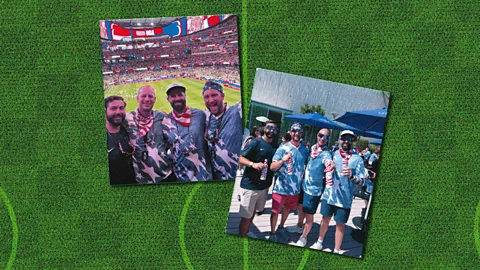
American football journalist Michael LoRé regularly attends games all around the world, but witnessing a World Cup on home soil was a glorious first. When the host cities were first announced, he immediately contacted his childhood football friends. Now dispersed across the US, they relished the chance to reconnect over their love of the sport.
They opted to meet in Los Angeles to see the US play Paraguay, splurging on the highest-priced, premium Category 1 seats at a whopping $2,735 (£2,041) each. “It’s very expensive,” LoRé admitted before the game. “But it’s a once-in-a-lifetime opportunity, so begrudgingly we’re giving Fifa a lot of money to go to this game.”
LoRé plans to attend three other matches and said he will likely spend an estimated $10,000 between travel and tickets, quipping that since it’s partly for business he can justify it on his taxes.
For the first time in World Cup history, Fifa used dynamic pricing (where prices rise with demand) to maximise revenue, which disappointed LoRé as both a journalist in the industry and a lifelong football fan. “It’s disheartening because this is going to be the biggest sporting event ever. It’s ostracising a lot of people who want to take part. Soccer has roots as a blue-collar sport. Now it’s the billion-dollar game.”
 BBC/ Serenity Strull/ Michael LoRé
Nonetheless, the crew reported an incredible atmosphere ahead of kickoff, starting at the Los Angeles airport where their US football shirts attracted head nods and waves. Even waiting in a long queue to go through security didn’t feel like a problem. Chanting crowds, beating drums and celebrity sightings on the stadium screen (they spotted Jason Sudeikis, Halle Berry and Tom Cruise) added to the buzz.
But for the men, who used to watch televised World Cup games together before school, simply witnessing the US play on home turf was emotional. The experience was only boosted by their 4-1 victory.
LoRé acknowledged that paying premium prices didn’t yield premium perks. “There was no, ‘you have access to a suite’. But, $27 or $2700, we were still going to have an absolute blast. It was a premium experience because it was with these guys, not because of what we paid.”
 BBC/ Serenity Strull/ John Farley
The Scottish shoestring budgeters
Who: John Farley, 47; Allan Little, 47; Stuart Mackie, 47; Alistair Young, 47; Nigel Smith, 45; Alan Rennison, 48
Home city: Glasgow, Scotland
Match: Scotland v Haiti in Boston (13 June)
Overall costs: £1200 per person (£400 for tickets)
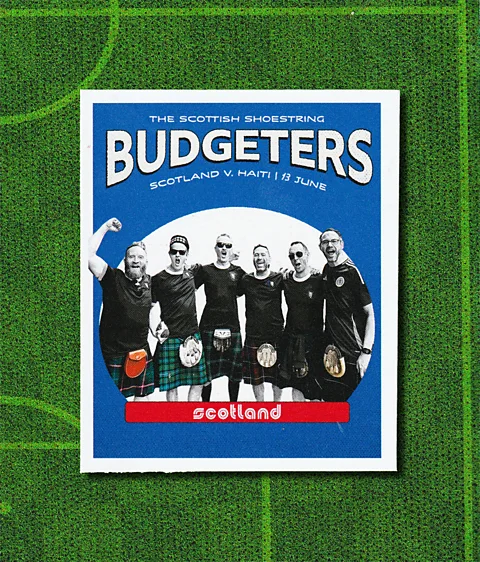
When John Farley saw how much World Cup tickets cost, he was shocked. But 2026 was the first time the Scottish National Team had qualified for the tournament since 1998, when Farley and his friends were teenagers.
“We’ve been friends since we were at school, so we’ve been to lots of Scotland games together in Scotland and abroad,” he said. “It’s a big emotional connection.”
The group is on a tight budget, so Farley put much of their trip down to “luck, in many ways”. They used points to book flights to New York City before the games were announced, hoping that Scotland would end up in a group nearby. When the team was drawn to play two games in Boston, the group got flights up for the first match.
They were also clever with accommodation, sharing budget-priced rooms in Boston and crashing with friends in New York City.
 BBC/ Serenity Strull/ John Farley
On 13 June, the group arrived at Gillette Stadium in Boston – faces painted, kilts fluttering, Scotland flags waving – and found an electrifying atmosphere. They were amazed by the stadium, much larger than where they’ve seen Scotland play in the past, and the view from their top level seats.
Farley would have liked to see Scotland score more goals but was thrilled with their 1-0 win. “The feeling when John McGinn scored our first World Cup goal for 28 years was something I will never forget.”
“We expected fun, hospitality and excitement and got it all.”
 BBC/ Serenity Strull/ Nathaniel Grundmann
The German honeymooners
Who: Nathaniel Grundmann, 30; Ines Grundmann, 31
Home city: Munich, Germany
Match: Houston for the Germany vs Curaçao in Houston (14 June)
Overall costs: $1500 (£1132) per person for the World Cup leg of their journey; $180 (£134) for tickets
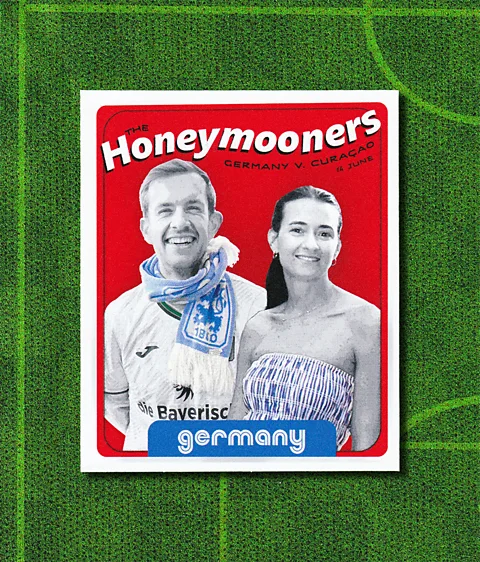
Nathaniel and Ines Grundmann already had a reason to come to North America this summer: their honeymoon. Both of the football-loving newlyweds had spent much time in the US and looked forward to reconnecting with memories and old friends. The World Cup was merely the icing on the wedding cake.
The Grundmanns, who are spending a week in Mexico and 10 days in the US, planned a World Cup detour in Houston. Thanks to their membership in the German Association’s fan club, they scored (relatively) inexpensive tickets for the Germany versus Curaçao match. While global tensions had initially made them apprehensive about returning to the US, the Grundmanns looked forward to their trip and were curious to experience American football culture.
Once they landed, any concerns were quickly assuaged. “At Homeland Security, you’re never sure how they’ll react to you, but this time we had a very good experience and everyone is always super nice and friendly,” said Ines.
 BBC/ Serenity Strull/ Nathaniel Grundmann
The good vibes continued during the match. “We had a super fun time,” said Nathaniel. “The stadium was amazing and the entire city [of Houston] was quite excited. The vibe between the people [was] very engaging and not like a local soccer club where everyone stays within their fans.”
They did report waiting half an hour in Houston’s notorious heat and humidity to enter the stadium, as well as surprising food and drink prices (“$19 (£14) for a beer!”) but were impressed by the convenient self-service checkouts.
The Grundmanns were also impressed by their breakfast of chicken and waffles at the “very stereotypical” Texan diner they visited the day of the game. “It was really funny at 06:00. It’s a unique combo.”
Overall, the couple said their World Cup expectations were not just met, but exceeded. “The most important thing is the vibe and [it] was definitely there, more than [we] would have expected,” said Nathaniel. “At a certain point it’s not about the specific dollar amount.”
—
If you liked this story, sign up for The Essential List newsletter – a handpicked selection of features, videos and can’t-miss news, delivered to your inbox twice a week.