From wild moors to starry skies, these trips show England at its summer bestFrom wild moors to starry skies, these trips show England at its summer best
Where to go in England this summer if you want to skip London
 Getty Images
From remote islands and wild moors to slow canals and starry skies, these six destinations encapsulate all that’s best about England in summer.
England in summer is sweetly intoxicating. During these long, languid days, London’s parks buzz with picnickers and festivalgoers, the honey-hued architecture of Oxford, Bath and the Cotswolds glows in the afternoon sun, and the solstice casts its annual spell on Stonehenge.
Who picked the list?
Paul Bloomfield is a travel, heritage and nature writer based in the West of England who has spent years exploring his home country in depth, mostly on two feet – from the South West Coast Path to Offa’s Dyke and the Scottish Borders. He has co-authored Lonely Planet guides to Britain and England, as well as Lonely Planet’s Where to Go When: Hiking, writes for the Telegraph, Times, Guardian and other publications, and hosts the podcast History’s Greatest Cities.
But beyond these perennial favourites, England’s variety is far stranger and richer than many visitors realise. This is a land shaped by Celtic, Roman, Anglo-Saxon and Norman histories. It’s the birthplace of Shakespeare and the Stones, soccer and lawn tennis, the Industrial Revolution and the Romantic poets. It’s cheese and cider, surf-sculpted cliffs and ruined castles, white-sand beaches and haunting moors. And all this packed into a compact nation measuring around 400 miles, as the crow flies, from Land’s End to the Scottish border.
These six destinations encapsulate all that’s best about England, from island beaches and lively cities to wild moors, castle-studded border country and endlessly dark skies.
 Getty Images
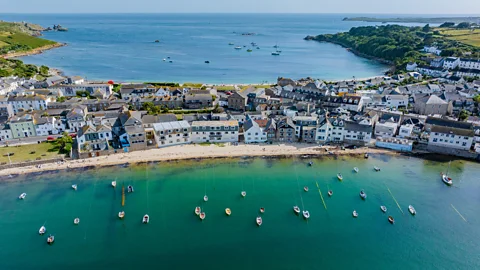
Best for traditional seaside delights: Isles of Scilly
If not quite the land that time forgot, these captivating specks 25 miles off Cornwall’s toe are certainly the islands that forgot time. Nobody’s in a hurry here. Perhaps it’s the climate: this is one of the sunniest, driest and mildest places in the UK.
Each of the five inhabited islands has its own character. The largest, St Mary’s, is home to Hugh Town, the island’s tiny capital that boasts not one but three sweeps of golden sand, with fine snorkelling to boot. Elsewhere, St Mary’s is awash with ancient sites: chambered cairns, batteries, prehistoric settlements and historic defence structures – all of which are best discovered on a 10-mile island-circling hike. Neighbouring St Agnes claims England’s most south-westerly pub, The Turk’s Head; I vividly recall ordering fish and chips from the bar and munching them happily on the western shore as the sun melted into turquoise waters.
St Martin’s has the whitest sand – sink your toes into the pristine powder of Great Bay – and great watersport options, from stand-up paddleboarding to snorkelling with grey seals. It’s also home to England’s most south-westerly vineyard and winery. Car-free Tresco is both family friendly and sophisticated, with subtropical gardens set amid the ruins of a Benedictine abbey. Swells rolling in across the Atlantic pound windswept Bryher, enhancing its end-of-the-world ambience.
Make it happen: The Scillonian III ferry sails between Penzance and St Mary’s in 2 hours 45 minutes, or there’s Skybus flights from Penzance, Land’s End and Exeter airports. Both are bookable through Isles of Scilly Travel.
 Getty Images
Best for a history-lover’s road trip: Welsh Marches
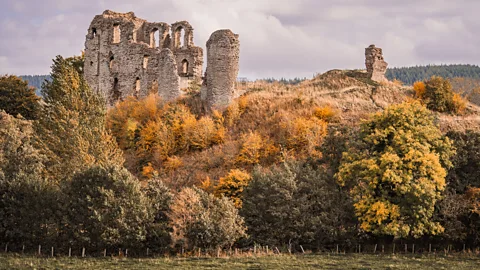
The border between England and its Celtic neighbour to the west was long contested. From at least the late 8th Century, it was marked by the snaking earthwork known as Offa’s Dyke. The Normans then installed dozens – perhaps hundreds – of burly stone bastions; the area that came to be known as the Welsh Marches reputedly has the highest concentration of medieval motte-and-bailey castles in Europe.
Summer suits this border country. Long days leave time for castle-hopping, market town wandering and tasting your way through the western reaches of Herefordshire and Shropshire. En route, ogle picturesquely ruined castles at Clun, Goodrich, Wigmore and Whittington, the fairytale fortified 12th-Century manor of Stokesay, the stately home of Croft, and the soaring towers and walls of Ludlow, to name just a few.
Immersive history lessons continue west of Hereford in a cluster of timber-framed settlements dubbed the Black and White Villages, whose Tudor-style architecture provided the ideal backdrop for the film Hamnet. Summer, when meadows and gardens are strewn with flowers and apples and pears ripen in orchards, is the perfect time to explore on foot or bike.
Ludlow is famed as the culinary capital of the Marches – its late-summer food festival is a big draw – and makes a wonderful starting point for a tasting tour showcasing of both counties, notably beef, asparagus, strawberries and cheeses and, in Herefordshire, spectacular ciders.
Make it happen: Discover cycling, walking and driving routes at Visit Herefordshire and Shropshire’s Great Outdoors. Stay at early 17th-Century Cwmmau Farmhouse, which stood in for the childhood home of Shakespeare’s wife, Agnes, in Hamnet.
 Getty Images
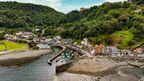
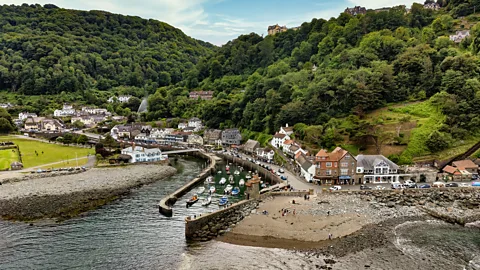
Best for walking and wild coastlines: Exmoor National Park
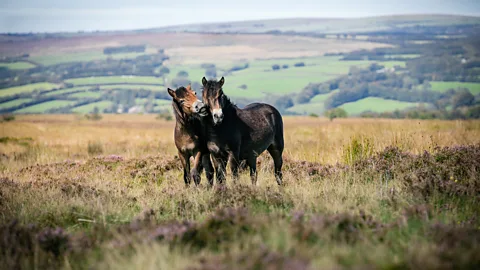
Exmoor is England’s most romantically wild corner. Straddling Devon and Somerset, this national park folds craggy coastlines, raw uplands, wooded combes and cream-washed thatched villages into one of the country’s most rewarding walking landscapes. Its dramatic scenery has long drawn writers, too: poets William Wordsworth, Robert Southey and Samuel Taylor Coleridge all found inspiration here, with Coleridge describing “this savage place” as “holy and enchanted”.
A network of trails stretching more than 600 miles laces the park, with inland paths following babbling streams through oakwoods to the heights of Dunkery Beacon, Exmoor’s highest point at 519m (1702 ft). The national park also encompasses England’s most remote shoreline and mainland Britain’s highest sea cliffs, with some of the finest stretches of the South West Coast Path winding along its edge.
There’s millennia of history to explore, too, from prehistoric standing stones and burial mounds to Iron Age and Roman forts, plus the medieval castle and Jacobean Yarn Market in Dunster. It’s home to red deer – Britain’s largest land animals – plus endemic Exmoor ponies, which are rarer than wild tigers or giant pandas. And, from this summer, enormous white-tailed eagles will once again soar over its cliffs and coves.
Make it happen: Base yourself in Porlock, one of Exmoor’s loveliest villages and a handy launch point for coastal walks. Accommodation ranges from campsites and studio apartments to winsome B&Bs such as thatched 400-year-old Myrtle Cottage and luxury stays such as Locanda on the Weir.
 Getty Images
Best for an alternative cultural city break: Norwich
Norfolk has long been the butt of jokes, with its capital city belittled as a sleepy backwater adrift in England’s secluded east. But over the past couple of decades, hip independent boutiques, bars and restaurants have sprung up in Norwich’s historic streets and squares, while districts such as the Silver Triangle, north of the centre, have quietly blossomed. In 2012, Norwich was designated England’s first Unesco City of Literature. This year, the city was named the best place to live in the UK by the Sunday Times, with its medieval Lanes, 900-year-old open-air market, leafy parks and welcoming pub gardens begging to be discovered on foot over long summer days and warm evenings.
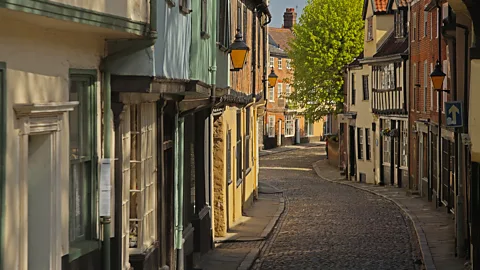
For centuries after the Norman invasion, Norwich was one of England’s largest and most prosperous towns, second only to London. That status is reflected in its outstanding medieval monuments, particularly its Romanesque cathedral, founded in 1096; and William the Conqueror’s square-shaped, highly decorated castle, which was recently revamped and shortlisted for the Museum of the Year award. For more medieval and Tudor relics, head up cobbled Elm Hill, pausing for refreshments in 13th-Century Britons Arms.
Norwich is far from all old hat, though. The extraordinary Sainsbury Centre, designed by Sir Norman Foster, houses one of the UK’s greatest modern art collections. Elsewhere, the South Asian Collection provides a deep dive into art, crafts and living traditions, plus a dangerously tempting shop.
Make it happen: Stay at the Maid’s Head on the site of an 11th-Century inn established by Norwich’s first bishop – reputedly the oldest hotel in the UK.
 Getty Images
Best for slow travel: Kennet and Avon Canal
For a few brief decades, the UK was the canal capital of the world. By the mid-19th Century, some 4,800 miles of waterways were bustling with trade – till the spread of the railways sent canals into decline.
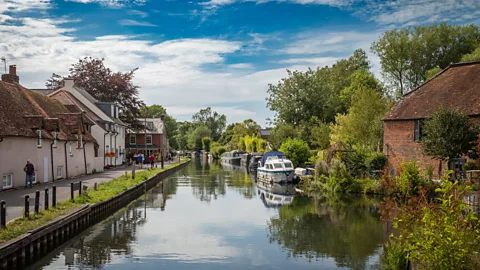
What’s left today is a network of liquid byways lacing England, populated by narrowboats and barges, swans and kingfishers, herons and water voles. One of the loveliest, the 87-mile Kennet and Avon Canal, moves at a deliberately unhurried pace – the speed limit is 4mph – with stops at historic market towns such as Newbury and Hungerford. In summer, swans lead their fluffy cygnets on first outings, and waterside pub beer gardens thrum with happy chatter on balmy evenings.
More like this:
There’s engineering heritage to admire, too, including soaring aqueducts at Avoncliff and Dundas, and historic pumping stations at Claverton and Crofton – where the world’s oldest working beam engine chugs away. Near Devizes, the Caen Hill Locks never fails to amaze: a sequence of 29 locks designed to carry boats up and down a two-mile-long slope.
Make it happen: Hire a narrowboat with Drifters, which offers boats of various sizes from bases along the canal. No licence or previous experience required; tuition is provided.
 Getty Images
Best for celestial solitude: Northumberland
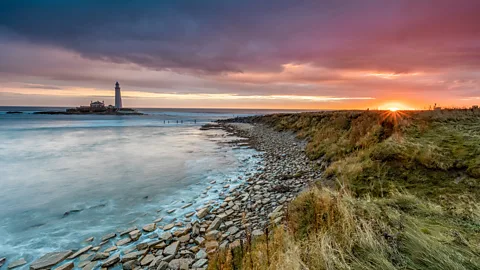
For travellers who want space as much as scenery, Northumberland is one of England’s great summer escapes. The country’s northernmost county is its least densely populated, with wide skies, big horizons and not a single city. Few tourists make it this far, and those who do tend to stick close to the coast, drawn by its windswept walking trails, dramatically perched castles and the Holy Island of Lindisfarne – all best explored on long summer days.
Inland, you’ll likely have just wildlife for company. Spot black grouse, hear the curlew’s haunting calls in the uplands and watch for osprey arriving each summer to nest in Kielder Water & Forest Park. But the real sky jewels emerge after sundown: spanning nearly 580 square miles and with negligible light pollution, Northumberland International Dark Sky Park offers superlative stargazing, with numerous observatories and other places to admire constellations, meteor showers, planets, nebulae and the Milky Way. In summer, darkness comes late – but clearer skies and long, quiet evenings are part of the appeal.
Make it happen: Book a stargazing session at Kielder Observatory or Battlesteads Observatory, which is attached to a country hotel with lodges.
—
If you liked this story, sign up for The Essential List newsletter – a handpicked selection of features, videos and can’t-miss news, delivered to your inbox twice a week.