Tripping between Panama’s Pacific and Caribbean shores through secret villages, David Amsden gets under the skin of the real PanamaTripping between Panama’s Pacific and Caribbean shores through secret villages, David Amsden gets under the skin of the real Panama
In Portobelo, a lush village on Panama’s Caribbean coast where the line between history and myth can feel faint, Sandra Eleta is known as the Great Witch. The wry and regal 83-year-old, whose striking photos of the town’s Afro-Panamanian community have made her one of the country’s most celebrated artists, has lived for more than half a century in an eclectic compound teeming with folkloric murals, feathered masks and mirrored canvases. It runs as an informal artists’ residency and hotel known as La Morada de la Bruja – The Witch’s Abode. Eleta’s works, arranged about the place like shrines, reflect her reverence for the region’s descendants of enslaved Africans from the Congo, first brought to Panama by Spanish colonialists in the 1500s. Eleta greets me with an embrace, a chilled red wine and words that carry the whiff of a mantra.“While here,” she says, “you are free to do whatever you’d like to do.”

I’m in Portobelo on a freewheeling road trip, travelling with my friend photographer Rose Marie Cromwell, who studied here under Eleta: her tales of past trips through the country’s less-trodden regions have inspired our zigzagging itinerary. Many visitors still view Panama through the tight lens of its storied canal. They might bed down in a resort town such as Bocas del Toro, or pass through on a cruise, but we are journeying across this famously narrow country – from Panama City to Portobelo and beyond – by car. Moving from the Pacific to the Atlantic in less than two hours, we traded the capital’s sprawling skyline, a symbol of Central America’s fastest-growing economy, for this drowsy hideaway with its rainbow of candy-coloured buildings, where the dominant sound is the throaty roar of howler monkeys. “Life here is different than anywhere else in Panama,” says Eleta as we settle in at an outdoor table over bowls of tangy ceviche. “You will see – it’s like a García Márquez novel.”

What sounds intriguingly abstract comes into sharp relief over the next two days. Rose and I are here to wander the UNESCO-designated ruins of the Fortress of San Fernando de Omoa, which the Spanish built between 1759 and 1775 during Portobelo’s long run as a critical port for shipping gold and silver to Spain. It’s one of three crumbling forts on the Caribbean side of Panama; the stone walls and rust-scabbed cannons stand as echoes of a fascinating and terrible past. For centuries, the harbour was the site of attempted raids and violence by pirates. Francis Drake died of dysentery off this coast in 1596. His crew placed his remains in a lead-lined coffin and dropped it to the seabed. Despite numerous searches, it has never been found.

Portobelo is filled with such lore. Nowhere do I encounter this more viscerally than on entering the Church of San Felipe, a hushed, draughty cathedral home to the town’s most revered figure: the Black Christ. According to one legend, the enormous statue of a dark-skinned Jesus bearing a cross was found bobbing in the harbour in the 1600s and became an immediate totem to the Afro-Panamanians. Centuries later, it remains a hallowed symbol of spiritual faith and resistance to colonialism. In a ritual that occurs every October, tens of thousands make a pilgrimage to view the effigy and seek penance, some trekking more than 50 miles barefoot in atonement.

The town’s allure, however, is not limited to its evocative heritage. To stay at Eleta’s hotel is to feel connected to the many artists who have whiled away days in the ornate hammocks hung in the open-air verandas – among them Amy Sherald, the acclaimed portrait painter of Black subjects including Michelle Obama. “Sandra has a lot of adopted children like me,” Rose remarks one afternoon as the three of us sit for a sprawling lunch of shrimp cooked in a garlicky coconut-based sauce. “This part of the country was unheard of when I first came here,” Eleta tells us. “I wanted to create a place to bring my friends from different parts of the world, to share my experience of this town that many Panamanians still do not visit.”

Then there is Portobelo’s beauty: raw and free of the commercial polish that can strip places of authenticity, as I discover on another day with Rose, spent bopping around to secluded beaches reachable only by boat. We sail through a labyrinth of mangroves, their spider-like roots forming an aquatic alleyway that leads to a lagoon where we swim in waters that glitter like polished quartz. Then we head to a nearby village where Eleta has arranged for a local to cook us octopus stewed in coconut milk, a regional dish with African roots.

Leaving Portobelo at sunrise, crisscrossing Panama’s isthmus twice, we reach a road that, via a gauntlet of harrowing switchbacks, deposits us at Puerto de Carti, the gateway to the Guna Yala Islands, known as the San Blas Islands until the government chose to revert to the Indigenous name in 2011. The mesmerising archipelago is autonomously governed by the Guna people, a native group who won independence from Panama in 1925. While some opt for day trips here, and others stay in thatched-roof hostelries run by the Guna people, we’ve chartered a sailboat, an immersive and comfortable way to experience the islands. Gitano del Mar is a 52-foot catamaran. Captain Arvin Haghnazarian, a dreadlocked poet-philosopher, is originally from Armenia and has spent most of the past 15 years on the water. His T-shirt reads “Fucking Bueno!!!” – an apt motto for the days ahead.

A good place to start when trying to grasp the basics of Guna Yala is to imagine a desert isle of bone white sand with a palm tree arcing over water so blue it feels backlit, then picture more than 300 of these islands and layer in an ancient culture. As we hop from island to island on Gitano del Mar, the pleasures are elemental: drinking coconut water from the shell, paddleboarding over sinuous stingrays, sipping potent rum cocktails prepared by Haghnazarian, who entertains us with tales of his seafaring life. “My favourite thing is sleeping because, in a boat, you don’t sleep in a normal way,” he says. “Awake, asleep, you are kind of always -dreaming.” As we sail, Guna people paddle up to us in canoes. Some sell molas, the hand-stitched textiles that are part of their traditional garb; others offer freshly speared seafood that the boat’s chef, Frenchwoman Coline Potier, turns into exquisite lunches and dinners of lobster ceviche and sesame-crusted tuna.

Yet this is among the most vulnerable places on the planet. “Every year the sea takes a little bit more,” says Haghnazarian. He has seen some islands reduced to wispy sandbars in the eight years since he started sailing the region. Acknowledging the effects of climate change, Panama’s government has asked the Guna people to move to the mainland; in 2024, more than a thousand of them were resettled into new-build homes on the coastline, an ominous sign that one of the country’s most astonishing treasures, and its culture, might not exist for much longer. The islands’ disappearance would make sailing this coast an entirely different experience.
On an island called Banedup, we stop for coconut bread at Ibin’s Beach Restaurant, a rustic wooden structure stilted over turquoise water where its namesake owner, Ibin Linares, holds court. Raised on the islands, he worked in Panama City restaurants for years before deciding, during the pandemic, to return to Guna Yala and open his own place. “Everything here we built by hand,” he notes proudly. “We don’t owe anyone anything.” When I mention the art hanging in the restaurant (enormous canvases that reference both Guna tradition and alien spacecrafts), the conversation shifts to the metaphysical. “We are here, you and me, in the third dimension right now,” he says. “But there’s another dimension the Guna believe you can inhabit: the fourth, that is all about a transfer of energy. You become like wind, like water.”

The next day, Haghnazarian anchors the boat near a small island that the Guna people use as a coconut plantation. “Feel like swimming with some sharks?” he asks. Peering over the ship’s stern, I see half a dozen nurse sharks circling, each larger than I am. Edgily, I enter the warm seawater. The panic is piercing, at least initially. But then it becomes part of the singular thrill of swimming close to these creatures. We drive into Panama’s interior, ending the day in El Valle de Antón, a town of rugged charm built inside the nearly four-mile-wide caldera of an extinct volcano. The air is cooler, drier – a respite after the unrelenting humidity of the Caribbean. At nightfall, the chatter of tanagers, toucans and motmots gives way to a symphony of croaking frogs.

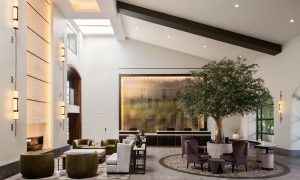
Long a mainstay among backpackers, the country has lagged behind its northern neighbour Costa Rica in creating boutique stays for a wider spectrum of travellers. Hotel La Compañía del Valle, which opened just a few weeks before our arrival, is an exception. Its hundreds of art installations look as if they have been airlifted from Burning Man. Encircling a stately tree on the lawn, enormous white fibreglass fingers emerge from the grass as if trying to communicate a message I can’t decode. “I made all that with AI,” says the hotel’s owner, Chris Lenz, a garrulous Canadian and former Hong Kong nightlife entrepreneur. “Something comes into my head and – boom! – I type it into my phone and have it made.” After days spent immersed in Panama’s traditional cultures, El Valle de Antón is a gear change, but it’s still a whimsical retreat for exploring an area that remains off the radar.

Following lunch in the town’s central market – a maze of kiosks stocked with everything from exotic fruits to hand-woven baskets – Rose and I drive to the Azuero Peninsula. Jutting into the Pacific Ocean from Panama’s southern coast, it’s a landscape of arching skies, cattle ranches and undulating hills that look dramatically different throughout the year, bursting with greens during the rainy season and turning flaxen in dry months. Long the purview of vagabond surfers, its coastline is peppered with small towns – Venao, Guanico and Cambutal are in various stages of being reshaped by bohemian expats. Outside the village of Pedasí, we encounter yet another side of Panama: a country quietly evolving to cater to the global jet set. Rose and I arrive at Casa Loro via a paved road that fades into a muddy track. The mansion is one of a connected trio of palatial estates set amid 1,527 acres of reforested ranchland christened the Reserva Ecológica Panamaes. On a cliff with theatrical views of the churning Pacific, it’s the private retreat of Aerin Lauder, granddaughter of Estée Lauder, when not rented out. Maria de los Angeles Echeverria, Casa Loro’s director of hospitality, ushers us into a life of refinement. After cocktails, we eat a beetroot salad flecked with “cacao soil” and fresh shrimp paired with a zesty passion fruit salsa. Aided by a floral Chilean white wine, I sink into a hibernatory slumber.

One morning we wake early and walk to the small beach where we’re met by a slick boat; minutes later we’re in open water drifting alongside a pod of humpback whales. One of the boat’s expert fishermen hooks a feisty, formidable yellowfin then hands me the rod to reel it in. After decamping for a decadent breakfast back at the hotel, we surf off the meal at nearby Playa Los Panamaes, a primordial expanse of sand dotted with jagged boulders where Rose and I have the curling break all to ourselves.

Are days like these how the one per cent achieve that supple, burnished glow? Our stay at Casa Loro also includes: a lunch involving crudo made from the tuna I’d pulled in hours earlier; riding through the jungle at sunset on a horse; and a dinner of banana blossom empanadas and cashew apple ceviche prepared by Andrea Pinzon, a young vegetarian chef brought in from Panama City. Despite the spoiling, a more primal memory lingers above the rest. One night, just after sunset, we are driven hurriedly to the reserve’s turtle nursery, a slip of protected beach where more than 60 green turtles have just hatched. In the dark, Rose and I help move their tiny wriggling bodies to the sand, then watch as they shuffle toward the breaking waves. Moments later they are swept away by the ocean.

One for the Road
Driving across Panama’s diverse terrain is easier than expected, allowing travellers to see both coasts. In Panama City, the excellent Hotel La Compañía Casco Antiguo has an unbeatable location in the old town. A four-wheel drive is needed for the stretch to Guna Yala, from where it’s some 90 minutes north to the village of Portobelo. Here the best stays are Sandra Eleta’s La Morada de la Bruja, a laid-back hotel and artists’ residency, or her cousin Aurora’s upscale retreat across the Bay of Portobelo, El Otro Lado – Private Retreat. Winding roads across the country – all paved, but the last stretch through the rainforest is steep and damp – lead to Puerto de Carti, the gateway to the Guna Yala Islands. The archipelago is best seen by chartering the catamaran Gitano del Mar via San Blas Sailing. Doubling back past Panama City to El Valle de Antón, a town built inside the crater of an extinct volcano, there’s Hotel La Compañía del Valle, a smart new wellness stay that departs from Panama’s usual workaday hotels. The Azuero Peninsula is dotted with small towns as well as upmarket estates such as Casa Loro and Ama Estancia, and the low-key stilted cabanas at Eco Venao.