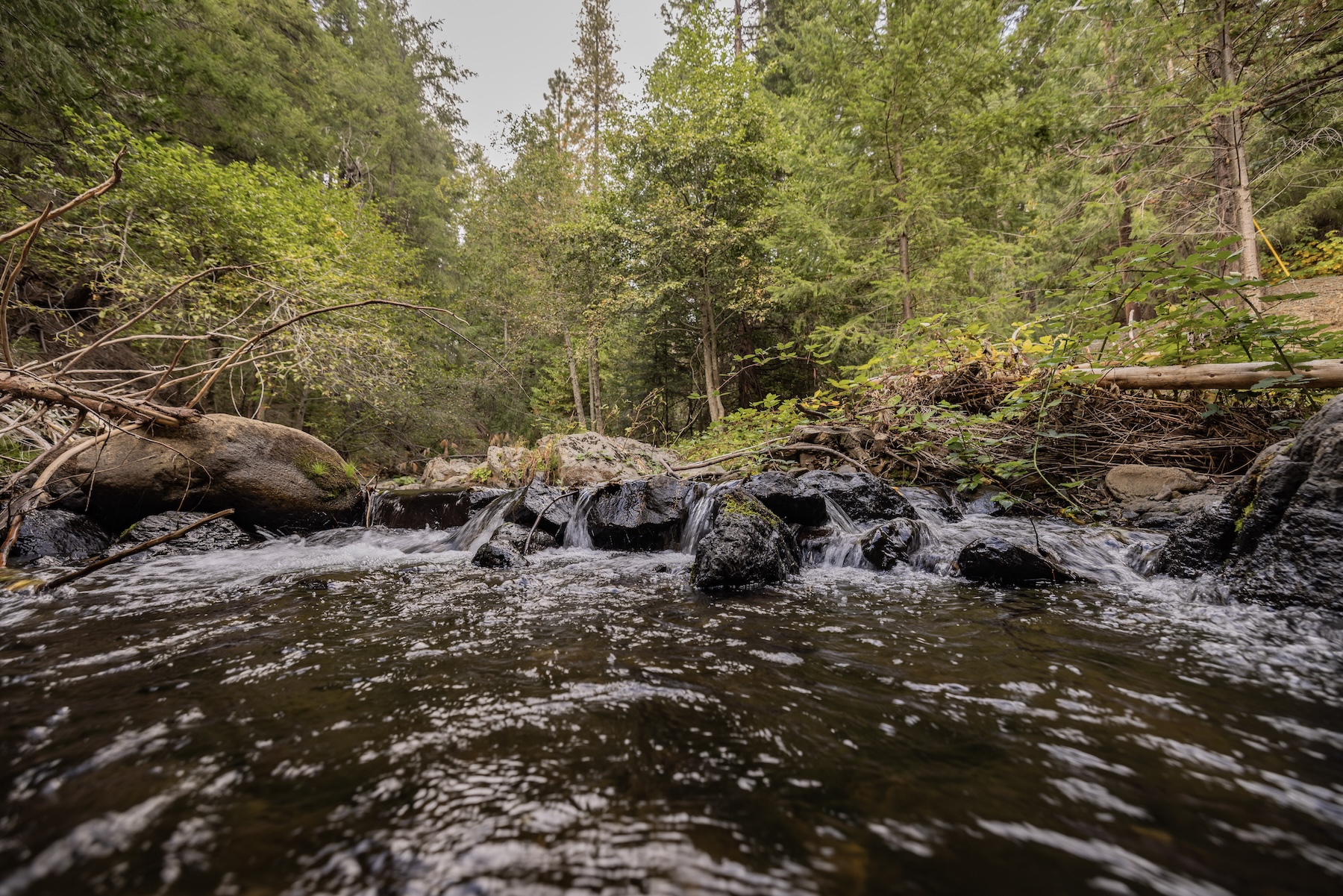
The project uses the Forest Resilience Bond, a financing model that combines public and private funding to accelerate forest restoration.The project uses the Forest Resilience Bond, a financing model that combines public and private funding to accelerate forest restoration.
Amazon is backing a large-scale watershed restoration project in California’s Upper Mokelumne River Basin, part of a broader effort to protect regional water supplies while reducing wildfire risk across the Sierra Nevada.
The project centers on 26,000 acres within the Eldorado National Forest, a key water source for communities in the East Bay. Restoration crews are expected to begin thinning overgrown vegetation and restoring native trees ahead of wildfire season this spring and summer. Project partners said the work could increase downstream water availability by more than 264 million gallons annually while helping protect vulnerable wildlife species, including the Sierra Nevada yellow-legged frog and California spotted owl.
Funding comes through a Forest Resilience Bond developed by Blue Forest and the World Resources Institute, combining public and private capital to finance restoration work that would otherwise move more slowly through traditional funding channels. Project partners include the U.S. Forest Service, the Upper Mokelumne River Watershed Authority (UMRWA), Miwok and Washoe Tribes, Pacific Gas & Electric Co. and the East Bay Municipal Utility District.
“UMRWA and our member agencies more than welcome this support to augment the funding for our planned projects to advance community, forest, and watershed health,” said executive officer Richard Sykes. “This commitment shows that contributions from both the public and private sectors can meaningfully reduce the funding gap to achieve a resilient watershed.”
The Upper Mokelumne watershed plays a major role in storing and filtering water for Northern California communities. Still, decades of dense vegetation growth have left large portions of the forest increasingly vulnerable to severe wildfire. Restoration efforts are designed to reduce that risk while improving the amount of water that ultimately reaches downstream users.
“No single organization, agency, or community can solve the wildfire crisis alone,” said Nick Wobbrock, co-founder and chief conservation officer at Blue Forest. “Reducing catastrophic wildfire risk, protecting water quality and quantity and safeguarding the communities in between—these are shared challenges that demand shared solutions. Blue Forest was built on the belief that when the right partners come together around proven science with innovative funding and financing, we can restore resilience at a landscape scale.”
According to project estimates, the restoration work could also strengthen wildfire protection efforts across Alpine, Amador, Calaveras and El Dorado counties, with additional watershed benefits extending into San Joaquin, Alameda and Contra Costa counties.
Amazon said the project is part of its broader water replenishment strategy tied to its goal of making Amazon Web Services “water positive” by 2030. As of the end of 2024, the company said AWS had reached 53 percent of that target, up from 41 percent the previous year.
The e-tail and technology giant’s water strategy includes reducing water use in data centers, expanding the use of recycled and harvested water sources and funding watershed and infrastructure projects in regions where it operates. Amazon said it currently supports more than 45 water replenishment projects globally.