Since early 2023, Nvidia (NASDAQ: NVDA) has been one of the undisputed beneficiaries of the mad dash to adopt artificial intelligence (AI). The company’s graphics processing units (GPUs) — which were developed to render lifelike images in video games (hence the name) — have since become the gold standard for AI training and inference.
In little more than three years, Nvidia stock has soared 1,410% (as of this writing), resulting in significant gains for shareholders. Yet fears of an AI bubble, rising competition, and geopolitical uncertainty have kept the stock rangebound, with the stock rising just 10% over the past six months.
However, Nvidia says it has clear visibility into demand over the next couple of years, and investors should be paying attention.
Demand for AI and Nvidia’s industry-leading position could drive its stock price significantly higher over the next couple of years.
Since early 2023, Nvidia (NVDA +1.90%) has been one of the undisputed beneficiaries of the mad dash to adopt artificial intelligence (AI). The company’s graphics processing units (GPUs) — which were developed to render lifelike images in video games (hence the name) — have since become the gold standard for AI training and inference.
In little more than three years, Nvidia stock has soared 1,410% (as of this writing), resulting in significant gains for shareholders. Yet fears of an AI bubble, rising competition, and geopolitical uncertainty have kept the stock rangebound, with the stock rising just 10% over the past six months.
However, Nvidia says it has clear visibility into demand over the next couple of years, and investors should be paying attention.

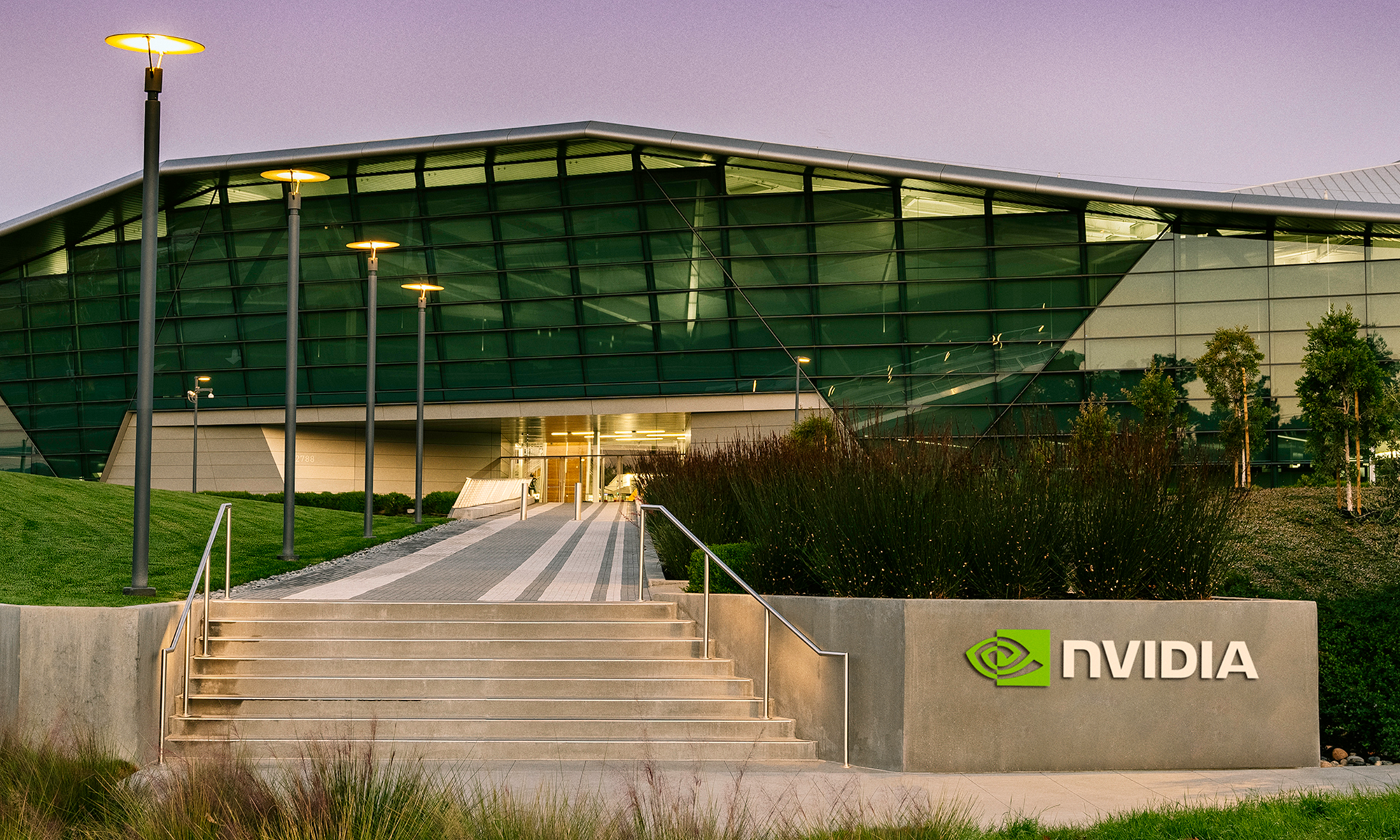
Image source: Nvidia.
It’s all about the data center
What sets Nvidia apart from its rivals is the company’s full-stack solution: a combination of industry-leading chips and software that coaxes higher performance from each successive version of its GPUs.
The company was among the first to understand the important implications of parallel processing, which accelerates computationally intensive workloads by dividing massive tasks into smaller, more manageable subtasks and assigning them to the various “cores,” or processors within the GPU. The ability to manage these increasingly Herculean tasks more swiftly was crucial to recent advances in AI and instrumental in Nvidia’s current success.
The hub of AI processing is the data center, given the sheer computational horsepower required to train and run these massive models. The accelerating demand has driven the ongoing data center boom, which is still in the early innings, according to most experts.
For example, global management consulting firm McKinsey & Company estimates that AI infrastructure spending, which is fueling the data center build-out, will soar to $7 trillion by 2030. Nvidia has a 92% share of the GPU data center market, according to IoT Analytics, so it will continue to be the primary beneficiary of the trend.
Don’t take my word for it. Nvidia CEO Jensen Huang has provided insight into what’s coming over the next couple of years, and the implications are profound. In an interview, Huang said:
We have $500 billion dollars’ worth of visibility. And at this point, at this point, with another 21 more months to go to the end of 2027, we already have high confidence, high confidence visibility of $1 trillion plus of Blackwell and Rubin, not anything else, just Blackwell and Rubin.
Assuming his estimates are correct, it gives us a starting point for calculating what Nvidia’s stock price could be by the end of 2027
Here’s the math
During the company’s fiscal 2026 fourth quarter (ended Jan. 25), Nvidia issued first-quarter guidance calling for revenue of $78 billion. This implies that Nvidia expects to generate the remainder, or revenue of roughly $922 billion, over the next seven successive quarters.

Nvidia
Today’s Change
(1.90%) $4.08
Current Price
$219.28
A quick calculation shows that roughly 13% sequential growth in each of those seven quarters would result in total revenue of $1 trillion over the two-year period. Mathematically, Nvidia would generate revenue of $379 billion in 2026 and $621 billion in 2027.
Nvidia currently has a market cap of roughly $5.36 trillion and a price-to-sales (P/S) ratio of roughly 25 (as of this writing). If its P/S ratio remains constant, and if Nvidia were to generate revenue of $621 billion in 2027 — still a big “if” — its stock price could jump 252% to $640 per share. That would drive the company’s market cap to roughly $15.5 trillion.
I’m not the only one who thinks so. Beth Kindig, founder and lead tech analyst at the I/O Fund, posits that Nvidia will be a $20 trillion company by 2030.
The key reason that Nvidia can reach a $20 trillion market cap by 2030 is because the company is moving its GPU generation cadence to a rapid 12–18 month cycle compared to custom silicon, which is typically on a 3–5 year cycle.
This relentless pace of innovation has proven to be Nvidia’s superpower and will likely keep the company at the forefront of AI development for years to come.
The fine print
The world of investing is a dynamic place, and things change at the speed of sound. This is fun with numbers based on what we know today. Changing any of the inputs could dramatically alter the outcome — either higher or lower.
The competition is working feverishly to push Nvidia off its pedestal. Rivals are developing competing GPUS, Application-Specific Integrated Circuits (ASICs) have attracted significant attention, and start-ups like Cerebras are developing novel approaches to chipmaking. Economic and geopolitical factors could upset the apple cart. That said, even if Nvidia doesn’t reach that level by next year, its growth trajectory is clear.
Finally, at just 26 times forward earnings and 20 times next year’s expected earnings, the stock is a steal. Strong secular tailwinds and Nvidia’s long track record of consistent execution make the case that the stock is a buy.