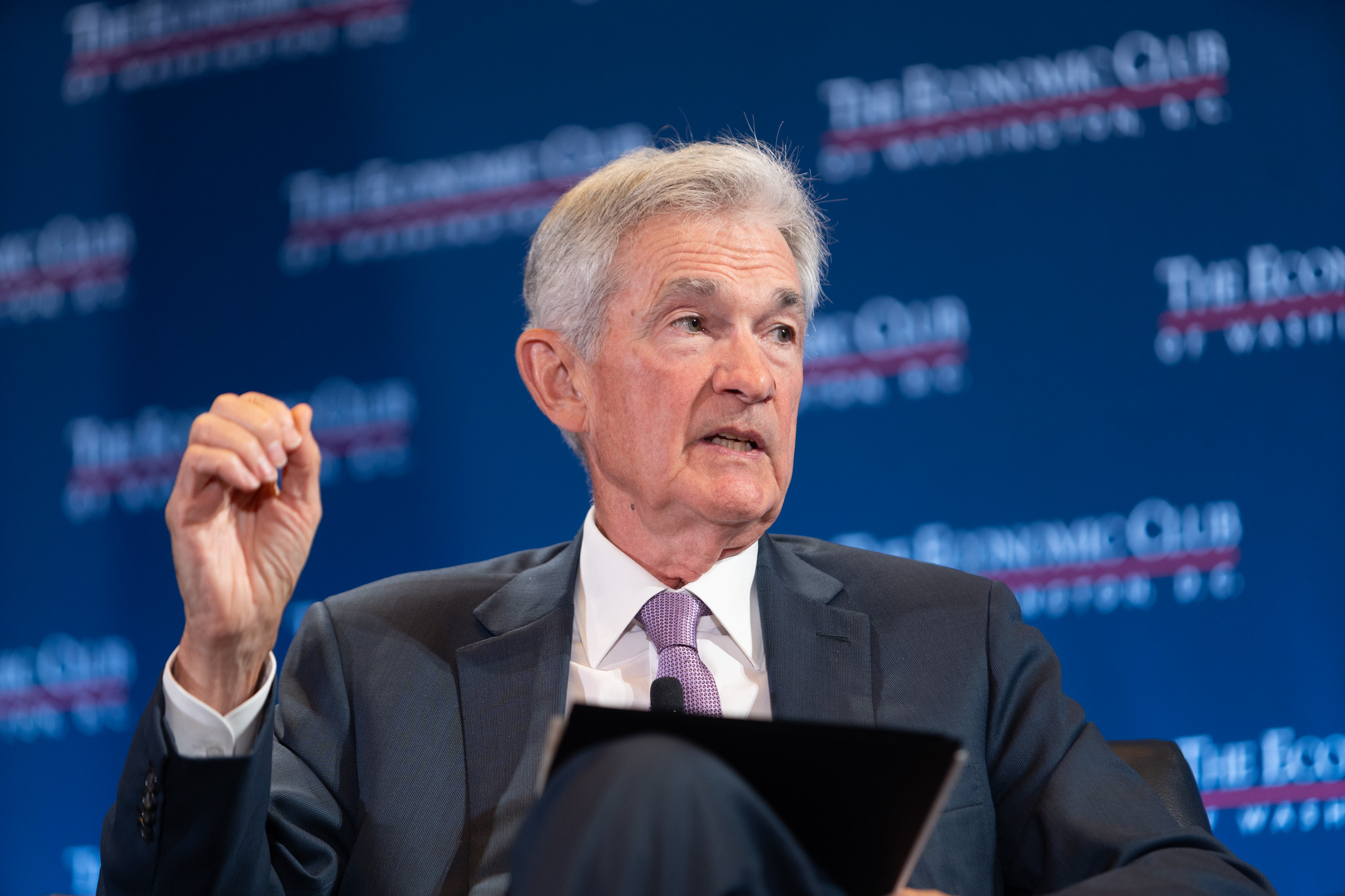
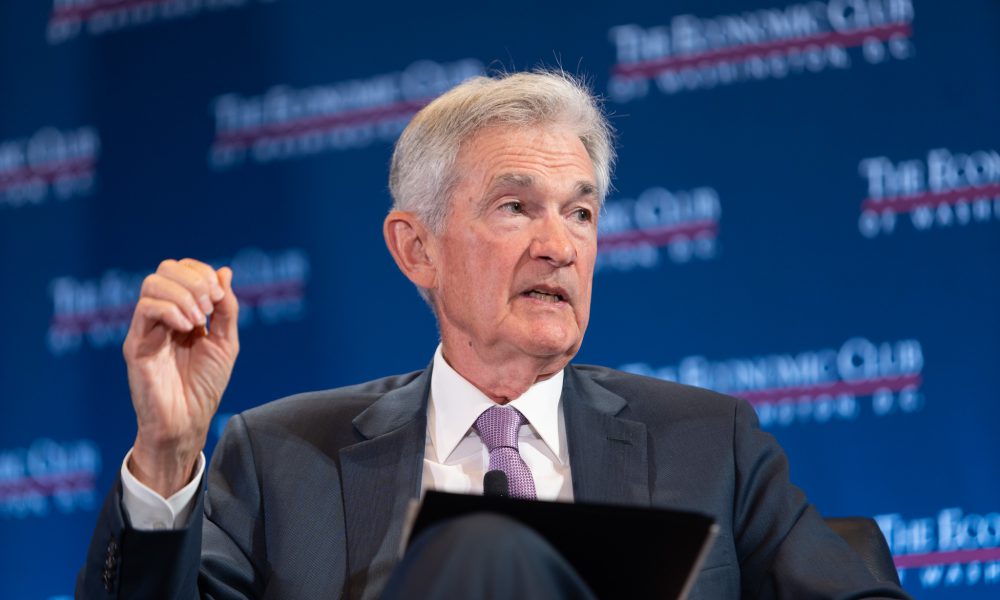

This is a history-making week for Wall Street’s foremost financial institution, the Federal Reserve. Friday, May 15, will mark Jerome Powell’s final day as Fed chair and, presumably, the beginning of Kevin Warsh’s first term as the 17th Federal Reserve chair.
It may also signal a new era for Wall Street and its major stock indexes: the Dow Jones Industrial Average (DJINDICES: ^DJI), S&P 500 (SNPINDEX: ^GSPC), and Nasdaq Composite (NASDAQINDEX: ^IXIC).
Even though Powell will be out of the spotlight after this week, he’s nevertheless going out with a bang. Nine words uttered by the outgoing Fed chair at the Federal Open Market Committee’s (FOMC) latest meeting signal a firm shift in the narrative for the central bank (and Wall Street).
It’s the dawn of a new era for Wall Street’s foremost financial institution.
This is a history-making week for Wall Street’s foremost financial institution, the Federal Reserve. Friday, May 15, will mark Jerome Powell’s final day as Fed chair and, presumably, the beginning of Kevin Warsh’s first term as the 17th Federal Reserve chair.
It may also signal a new era for Wall Street and its major stock indexes: the Dow Jones Industrial Average (^DJI +0.02%), S&P 500 (^GSPC +0.84%), and Nasdaq Composite (^IXIC +1.71%).
Even though Powell will be out of the spotlight after this week, he’s nevertheless going out with a bang. Nine words uttered by the outgoing Fed chair at the Federal Open Market Committee’s (FOMC) latest meeting signal a firm shift in the narrative for the central bank (and Wall Street).
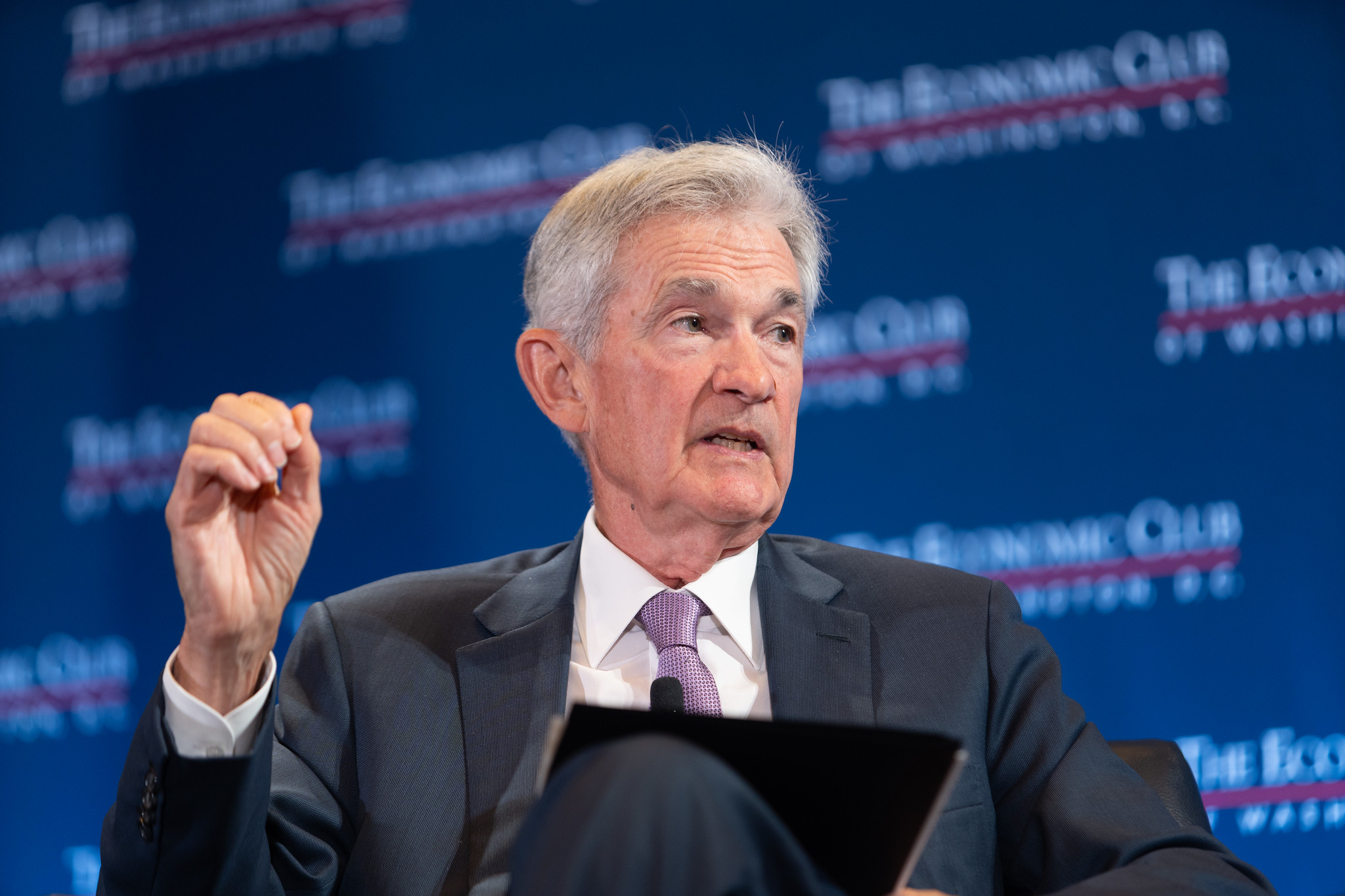
Fed Chair Jerome Powell delivering remarks. Image source: Official Federal Reserve Photo.
In some respects, the April 29 FOMC meeting offered no surprises. The 12 voting members of the FOMC responsible for setting the nation’s monetary policy chose to keep the federal funds target rate unchanged. But it’s the nuances within the voting that really stood out.
Though Powell has had the lowest dissent rate per meeting of any Fed chair over the last 48 years, the late April meeting featured four dissents — the highest number since 1992. One was Stephen Miran, who continues to push for a cut to the federal funds target rate. The other three all disagreed with the inclusion of an easing bias statement.
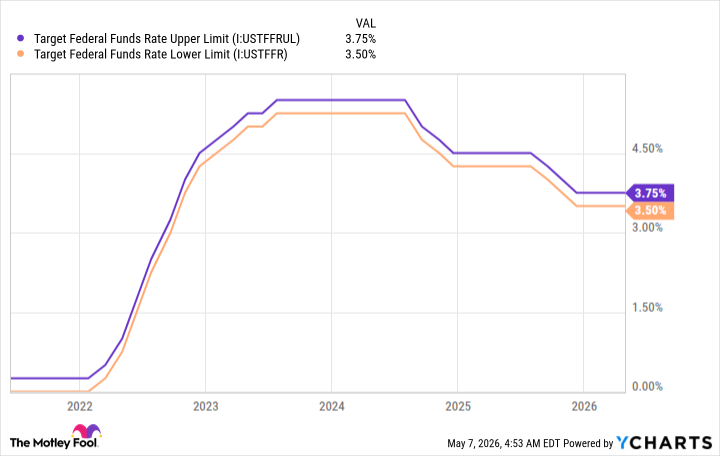
Target Federal Funds Rate Upper Limit data by YCharts.
Between September 2024 and December 2025, the FOMC lowered the federal funds target rate, which influences interest rates, six times. But the combined price shocks from President Trump’s tariffs and the Iran war have had a decisive impact on U.S. inflation. These price shocks have begun shifting how members of the FOMC approach their task of maximizing employment and stabilizing prices.
While fielding questions from reporters after the April 29 FOMC meeting, Powell was asked by Yahoo! Finance’s Jennifer Schonberger if the committee still had a bias toward rate cuts, or if that had shifted. Powell’s response speaks volumes:
So I think that, you know, the center is moving toward a more neutral place. And that’s sort of what markets are saying, too.
“The center is moving toward a more neutral place” is nine words that clearly put a fork in the prospect of near-term rate cuts and leaves the door wide open for the FOMC to shift to a neutral or hiking bias in the not-too-distant future as inflationary pressures pick up.
This admission by Fed Chair Powell is a tough to pill swallow for Wall Street and investors, given how expensive the stock market is. Whereas the S&P 500’s Shiller Price-to-Earnings (P/E) Ratio has averaged around 17.4 since January 1871, this time-tested valuation tool is now knocking on the door of 42!
Investors have been willing to tolerate premium valuations because they believed several rate cuts were expected in 2026-2027. But a record level of FOMC dissent, coupled with Powell’s commentary, shows that this narrative has firmly shifted. It leaves a historically pricey stock market susceptible to downside.