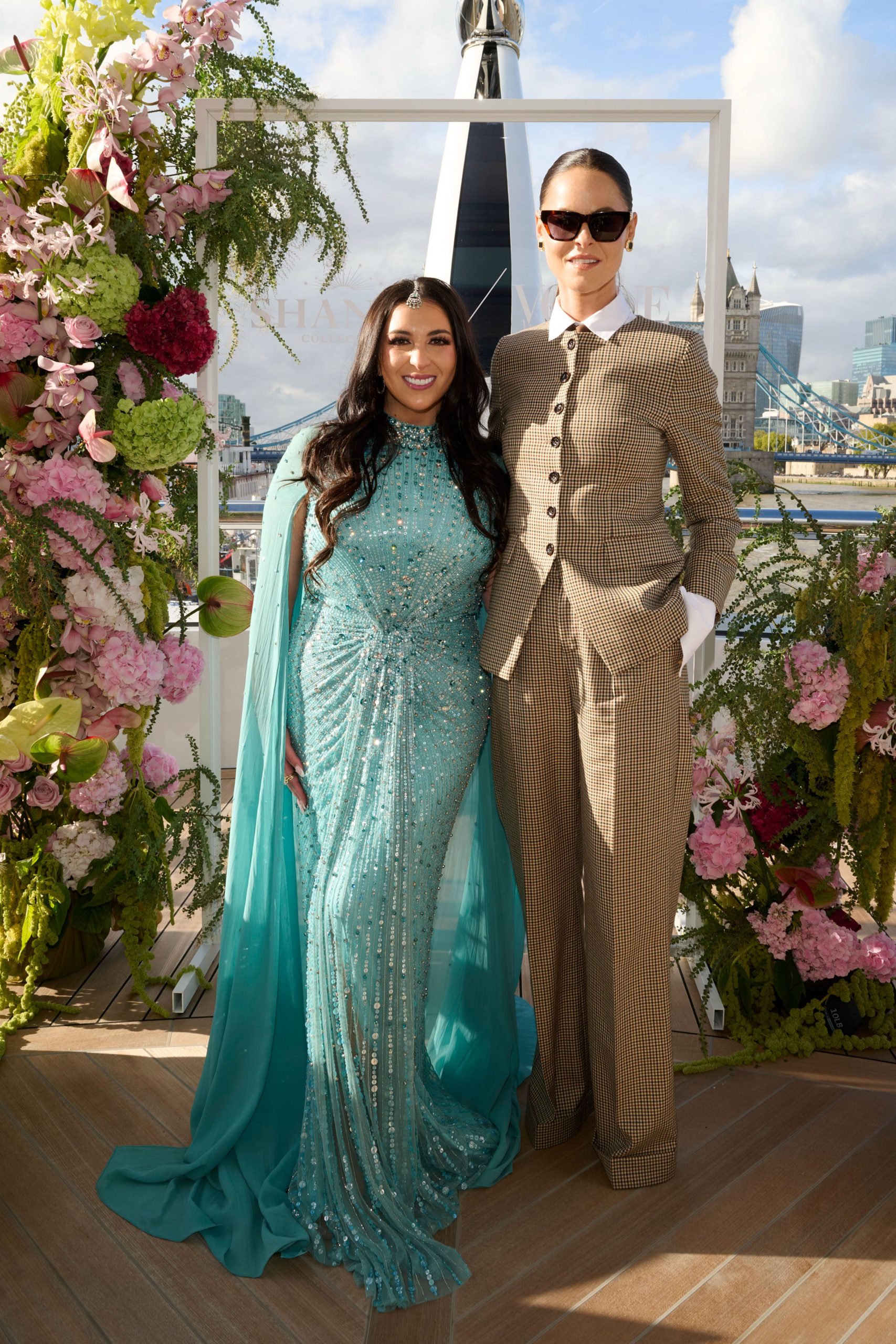
Vogue Business, in collaboration with Shanna Collective, welcomed guest speakers from Fabergé, Holland Cooper and RIBA onboard the superyacht Kismet to discuss building a brand legacy.Vogue Business, in collaboration with Shanna Collective, welcomed guest speakers from Fabergé, Holland Cooper and RIBA onboard the superyacht Kismet to discuss building a brand legacy.

What does it take to create something that truly endures? How can luxury leaders balance heritage with innovation and create spaces that are not only beautiful but meaningful to the people who inhabit them? Against the backdrop of London’s iconic Tower Bridge, some of the leading names in luxury gathered aboard one of the world’s most extraordinary superyachts, Kismet, for an afternoon spent discussing the legacies they hope to leave behind.
These questions brought together influential leaders across fashion, jewelry, architecture, real estate, retail, and technology for an exclusive Vogue Business gathering in collaboration with Shanna Collective. Held on October 14, with London’s historic skyline as its setting and the superyacht itself offering a compelling example of ambitious design, the event explored what it takes to create spaces, brands, and experiences that transcend generations. Hosted by Shanna Khan, founder and CEO of Shanna Collective, the afternoon opened with remarks from Vogue Business head of advisory and custom insights Anusha Couttigane, followed by a panel moderated by Vogue Business features director Lucy Maguire. Speakers included Sergei Mosunov, CEO of Fabergé; Jade Holland Cooper, founder and creative director of Holland Cooper; and Dr Valerie Vaughan-Dick MBE, chief executive of the Royal Institute of British Architects (RIBA).


Harnessing the hallmarks of design
Beginning the panel, Maguire asked Mosunov how Fabergé is translating the hallmarks of the brand, such as craftsmanship, detail, and surprise into the physical realm, given its ambitions to expand physically. “The previous owner had a business model that was focused on B2B. It didn’t have its own retail distribution. When I bought Fabergé, I decided that we needed to expand the direct-to-consumer business, with the main instrument being our own boutiques,” Mosunov explained.
The challenge is creating spaces that communicate the maison’s heritage while supporting its contemporary ambitions. “We needed to express this historical story through the boutiques, showcasing pre-1970 pieces and sharing the story about Peter Carl Fabergé, the founder of the company. This way, you get a real sense of the company.” Mosunov also shared how the brand is designing jewelry iterations of its iconic egg motifs, inspired by the fifty Imperial Eggs that secured the maison’s acclaim between 1885 and 1916.
Global growth, local relevance
As Fabergé expands its international retail footprint, Mosunov is adapting the design of its boutiques to local preferences. “For example, in the Middle East, we have a store in the Dubai Mall. They like very opulent forms in that region so we need to adapt the execution to the local marketplace.”
Vaughan-Dick reinforced the importance of cultural context in architecture. Referencing Norman Foster’s work in the Middle East, she highlighted the influence of climate, environment and local requirements on architectural decisions. “You cannot have this homogenous view of design. You have to think about culture, sustainability, and building safety. You have to look at the different requirements for that country and for that particular society,” she added.
Turning to Holland Cooper, Maguire asked about how she was creating environments that would resonate with the world of the brand. As a business that has grown from stalls at Badminton Horse Trials to a £100m+ company with flagship boutiques and a new 70,000-square-foot HQ in the Cotswolds, Holland Cooper spoke about the importance of making the brand experience as special as possible.

“Although we don’t have a lot of shops, the ones that we do have are so important.” she explained. “For me, the importance of retail is making that physical experience as special as we possibly can. I think there’s a narrative that retail is dead, that bricks and mortar is dead, but I think we’re just getting too lazy about the experience that we’re creating for the customer…what we’ve done in our physical retail spaces is really understand that the service and environment are paramount to that experience,” she added.
“Long life, loose fit”
Holland Cooper’s retail philosophy draws inspiration from brands including Ralph Lauren and Abercrombie & Fitch, whose distinctive environments left a lasting impression on her as a young shopper: “I am pedantic about music volume, lighting, smell, hanger presentation, visual merchandising, how the staff and the service levels are, because the minute you walk through those doors, you want it to be immersive, and you want people to forget the outside world. That’s why they call it retail therapy.”
Maguire then highlighted a tension in the theme: “Buildings need to endure, but the people, communities, and lifestyles they serve are constantly changing. How should brands, architects and developers design for longevity without becoming trapped by the tastes or assumptions of the present?” she asked.
For Vaughan-Dick, the guiding architectural principle is “long life, loose fit”: creating buildings capable of adapting to future needs. “I do think that individuals recognize that when you’re designing buildings, they don’t know what a building is going to look like in 100 years time, but every architect, every engineer, everyone here needs to think: what we design now needs to have that longer life,” she stated.

An obsession with heritage
For Mosunov, Fabergé’s design legacy distinguishes between timeless beauty, modern beauty, and more transient aesthetic preferences when considering its future. Holland Cooper similarly sees heritage as an enduring source of differentiation: “I am obsessive about heritage, classic shapes and just reinventing them to be appealing to the modern audience, and that doesn’t mean ripping the rulebook up entirely. I pay homage to all the beautiful British aesthetics, and that’s the romanticism of what we’re doing, really,” said Holland Cooper.
As a consequence, British manufacturing remains fundamental to the brand’s identity and ambitions. “All of our tailoring is made in London. All of the wool is woven in the UK, and I’ve done that since day one. And I was told that it wouldn’t be possible to scale a business and do that, and I have, and it is. And I’m really passionate about the UK manufacturing industry. So that’s a big part of our heritage,” she explained.
For Khan, these principles of detail, experience and emotional connection are paramount: “Jade shared her belief that every detail matters to drive an exuberant retail experience. Elements that may seem subtle influence how a place is experienced, remembered, and valued. For me, that is where design becomes truly meaningful: when we can transport guests in time and place, it moves beyond aesthetics to create an emotional connection that endures long after the initial experience itself.”

The afternoon concluded with a tour of Kismet, whose interior design was led by Shanna as chief creative director. The superyacht is an example of the extraordinary experiences that thoughtful design can create. For an industry deeply rooted in heritage, the gathering raised a pertinent question: what are today’s luxury leaders creating that will remain relevant and meaningful to future generations?
For Shanna Khan, working together across disciplines is central to answering this question. “Our collaboration with Vogue Business creates a valuable opportunity to bring different disciplines into our conversations and explore how ideas from across creative landscapes can inform one another. The future of luxury lies in creating places and experiences with substance, soul, and generational value,” she said. But she reflected: “Ultimately, building in an enduring way is defined by creating something that feels relevant today, salutes the heritage of the past, and has the potential to become part of a legacy for generations to come.”