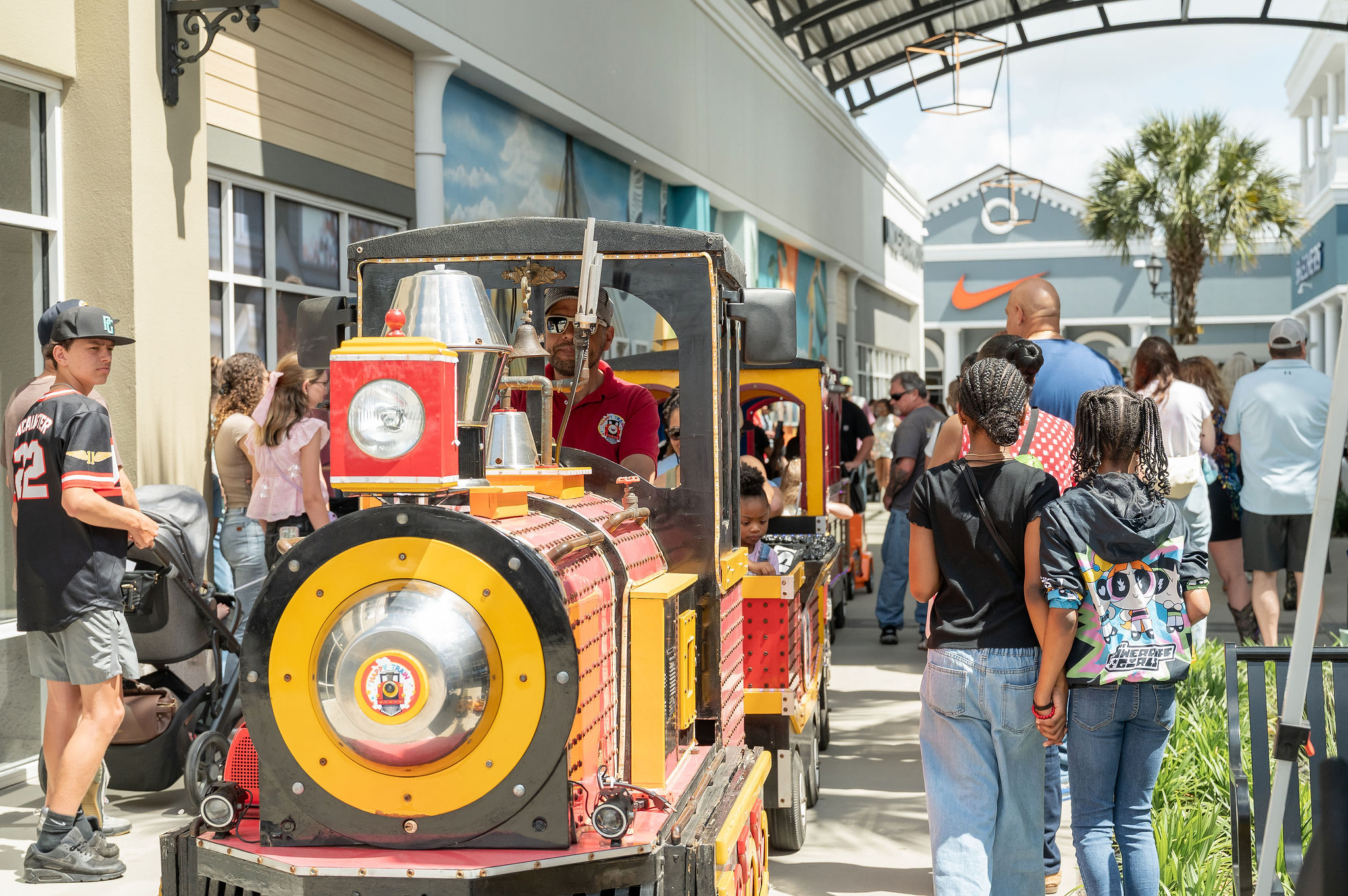
The owner and operator of 38 outlet centers and three open-air lifestyle centers counts Coach, Gap, Aerie, Sephora, Victoria’s Secret and Old Navy among its best-performing tenants.The owner and operator of 38 outlet centers and three open-air lifestyle centers counts Coach, Gap, Aerie, Sephora, Victoria’s Secret and Old Navy among its best-performing tenants.
Tanger, lifted by younger consumers who are increasingly shopping its outlets, continued to see healthy gains and robust leasing activity across several metrics last quarter, encouraging the company to raise its outlook for the year and its dividend.
“If you asked me what’s your superpower? I’d say we are an owner, operator and asset manager that is constantly reworking the merchandising mix to optimize for the markets that we serve,” Stephen Yalof, Tanger’s president and chief executive officer, told WWD. “It’s about a well-curated mix of uses, retailers, entertainment, just different categories that create this great customer experience that drives traffic. You have to understand your customer. You have to understand what they need and what they want.
“Gen Z, the 20- to-30-ish-year-old younger customer is really driving the bus,” Yalof said. “The brands in our centers that are the most successful are Coach, which has recently reinvented to speak to that younger customer, and Aerie, which is at the intersection of athleisure and intimate apparel, in a sweet spot. Gap is cool again and driving traffic, and Ralph Lauren is speaking to younger customers too,” Yalof said.
He also cited Sephora, Victoria’s Secret and Old Navy, which operate regular-price formats and not outlets at Tanger, as attracting healthy levels of shopper traffic. Adidas and Lululemon, two brands not performing at their best, are performing well at Tanger, Yalof said. “Adidas, now with World Cup coming, has gotten very hot. New Balance has gotten very hot and has done a great job of reinventing themselves to a younger consumer too.”
For the quarter ended March 31, net income available to common shareholders rose to 24 cents per share, or $28.1 million, compared with 17 cents, or $19 million, for the prior-year period.
Funds from operations available to common shareholders increased to $70.4 million from $62.7 million.
Based on the momentum, Tanger nudged up its estimate profit per share to $1.05 to $1.13, from its previous forecast of $1.04 to $1.12.
In addition, Tanger raised its dividend 6.8 percent from $1.17 to $1.25 per share on an annualized basis.
Asked if rising prices at gas pumps are impacting Tanger’s business, Yalof said: “Our sales and traffic numbers were both up in the first quarter. That old narrative of the outlet center being far away and requiring a thoughtful trip has changed in that residential population in geographies around many outlet centers have grown substantially in this post COVID[-19] era. Higher gas prices impact share of wallet, but we’re fortunate to be in the off-price business which mitigates a lot of that.”
There are eight Saks Off 5th outlets in Tanger centers, seven of which are closing. “There’s a number of brands that have become frontrunners to buy those leases out of bankruptcy, but in some of our markets, there’s more value in controlling our own real estate. So we are in the conversation and have high expectations that a number of those boxes are going to come back to us. We want to replace underperforming retailers with better performing retailers. There’s so much leasing activity out there — 3.4 million square feet this this year, the most we’ve ever done in the history of the company, so we think we can do a great job of replacing a lot of those Off 5th underproductive boxes with highly productive new users.”
In other statistics, occupancy was 97 percent on March 31, compared with 95.8 percent a year earlier.
Average tenant sales per square foot was $482 for the 12 months ended March 31 compared to $455 a year earlier, reflecting the company’s execution of its strategy to re-merchandise, replace less productive tenants, and evolve its portfolio.

Courtesy image