Fargo, who will receive the CFDA Founder’s Award on Monday, got her start in the display department at Macy’s — a role that eventually landed her a job at Bergdorf Goodman, where she’s worked for three decades.Fargo, who will receive the CFDA Founder’s Award on Monday, got her start in the display department at Macy’s — a role that eventually landed her a job at Bergdorf Goodman, where she’s worked for three decades.

I really didn’t know I wanted to work in fashion. I was an art girl, and my dream was to come to New York. I grew up in Wisconsin, and I couldn’t wait to leave the Midwest. My art form was found objects. I knew I had a real rapport with assemblage and repurposing things. I just didn’t really know how to become a fine artist.
The first job I got was at Macy’s in the display department. For my interview, I bought a vintage 1940s skirt suit at one of the shops on 8th Street and wore it with vintage heels, my hair styled in a French twist. I carried my massive art school portfolio, and I went the wrong way on the subway and ended up on the other side of the river in Brooklyn, with my interview in 20 minutes and no money to take a taxi. Somehow, I made it, and I became the production manager for the window director, and then within four years — by that point it was 1984 — I became Macy’s window director.

My staff were like, “You’re the Cecil B. DeMille of Macy’s, you’re keeping us here until one or two in the morning.” But I loved it. And believe it or not, we changed the windows every week. It was always about reaching. If an idea was good enough, we did everything we could to make it happen. So Macy’s was such an incredible education. It was like a microversion of all of New York. I learned how to bring people in, how to get them going on a project, and how to get them to paint 50 pieces by Wednesday when I just asked them last week. And that was an era when people were tough; they would yell at each other. We’re so proper now, but back then, things moved fast and if you weren’t fast, you were chopped liver.
When I left Macy’s, I was around 30, and I had become the store’s VP of visual. It was a big job for a young lady. I was offered a cool opportunity at I. Magnin in San Francisco, basically the West Coast Bergdorf Goodman. It was very elevated, and I thought, “I would be crazy not to try this.” Well, they went bankrupt about a year and a half later. I was like, “Oh my God. I just moved out here.”

I ended up getting an offer from The Gap. I didn’t really wear jeans, or khakis, but I admired what they were building. Mickey Drexler, the former CEO of Gap Inc., was full-on, and it was growing exponentially. He started Old Navy while I was there, and Banana Republic was hot, hot, hot. The company was on a roll. But the lesson for me was that unless I relate to a product, we’re not going to be a love match. They had 850 stores. It taught me I don’t love scale. I respected The Gap a lot, but I like something that I can put my arms around, and be close to the people, the product. I think as you go through jobs over the years, you learn what you don’t want, and that’s sometimes as informative as what you do want.
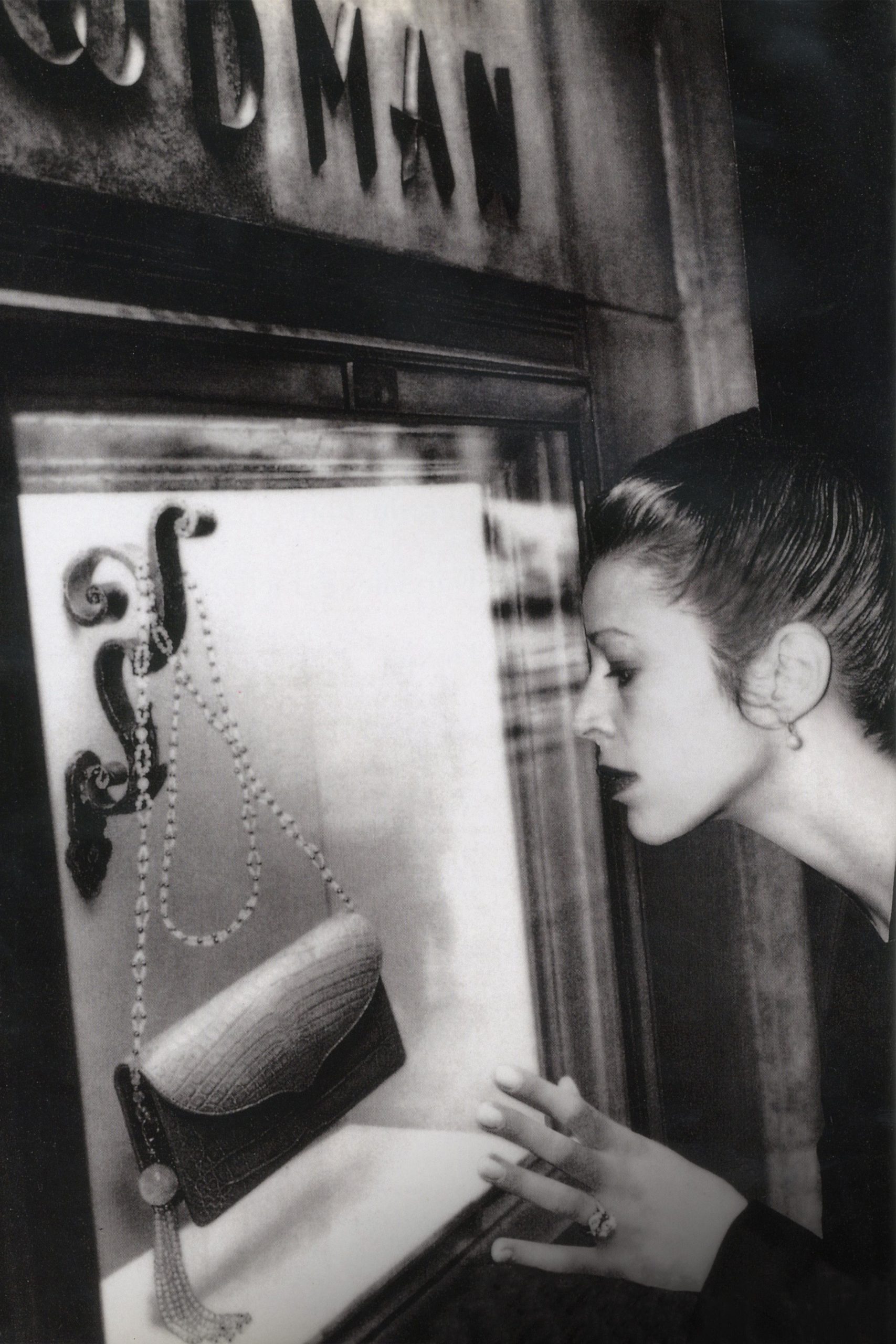
So it was a bit of an existential crisis. I ended up cold calling Bergdorf in New York, made a portfolio of ideas and threw it in the mailbox. The next thing I know, I’m invited for an interview with Dawn Mello, the president of Bergdorf at the time, and I was hired as the visual director in 1996. When I lived in New York, Bergdorf was the store where I’d press my face up against the glass, thinking: “If only I could be on the other side.” The reality was the store was quite staid; it had become a sleeping beauty. I saw a lot of opportunity, and again that started with the windows. That’s your first impression.
I remember my first summer there. It was June, I was working on the sidewalk on my first windows, and it was that beautiful time of day when dusk is beginning. I started to see the street lamps light up on Fifth Avenue, the big lanterns at Bergdorf were turning on, and the traffic was glittering down the avenue. And I’m standing in front of this beautiful mansion of a building, and I called my father. I was like “Daddy, I’m in front of Bergdorf, and I know this is where I want to be.”

People like to ask what my inspiration was, and the answer is “deadlines”. I didn’t have a lot of time to let inspiration come, I had to find it. And the fashion, the clothes, were certainly a big part of that. When I got to Bergdorf, they used to do one designer across the whole street, in every window.
One of my early ones was a circus, and because I could show all these different characters, we started doing windows that had a lot of different fashion at the same time — Mary McFadden, Mugler. And we still do that today. If we do all one brand, it’s a takeover and that’s a big deal tied to a major launch, like Matthieu Blazy’s New York collection for Chanel. We made it look like we had the subway running through the windows.
In 2006, Jim Gold, then our president, offered me the women’s fashion office after Robert Burke departed to start his own firm. He saw something in me that I didn’t even see in myself. I understood and appreciated fashion, but not as an editor per se. Jim was one of my valued door openers. I was on the fence about accepting the job, because I knew I would have to pass the baton on the window job, and I would miss the creative immersion. But I knew it was a great, once in a lifetime opportunity.

Today, I have a very different relationship with clothes than when I was a window director. I think, back of a napkin, I’ve been to 5,000 fashion shows. And that’s not counting showrooms, walkthroughs, re-sees, all of that. As I moved into the fashion office, I started realizing that designer discovery was something I needed to do. When I was a window director, it was just a fantastic Sarah Burton for McQueen origami jacket that would land on a railing in our store. Now, it’s a whole relationship — we’re talking to Givenchy, we’re thinking, “What are we going to do together next season?” I’m much more involved in the partnerships now.
But I would say this, the industry needs to always value and remember that the heartbeat and the raison d’être of our work revolves around the creativity of our designers. Everything we do is in support of that, to help nurture that creative kernel. We build our structure around them. But we have to edit, we have to be discerning. We can’t carry everything.
Ten years ago, we started Linda’s, my curated shop-in-shop at Bergdorf. It’s a great place for me to be experimental and do the small things. Normally, you have to buy a collection. Linda’s only carries one of everything. We don’t even do size runs — so there’s a lot of running to get the sizes for clients. It tells me there’s a hunger for curation and unique ideas within our world.
The fashion industry today is a very sophisticated, large business. The stakes are higher. When you’re growing, and you’re young, there’s only opportunity. Now, it’s all comps and growth. So the risk feels bigger. It’s a goal for me to bring my team along on more risk, because my instincts tell me that’s what we need in this very complex, mature business we’re in. It’s competitive. There are many more places where people can buy products now. The game is completely different, and we have to continue to innovate.