Mega-influencers are hopping between growing activewear giants. Does differentiation matter?Mega-influencers are hopping between growing activewear giants. Does differentiation matter?

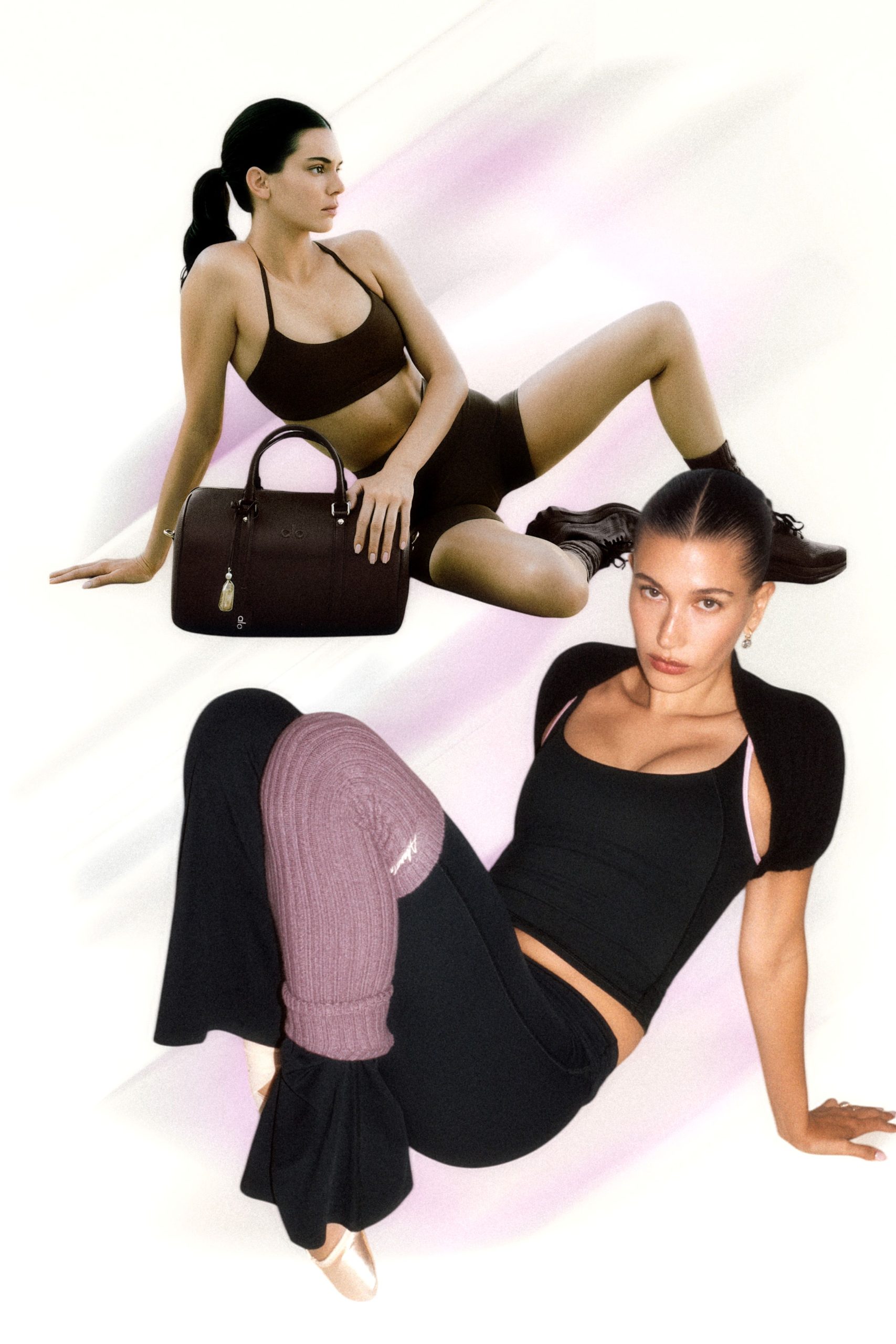
Earlier this month, Hailey Bieber’s first ballet-inspired collection with fast-growing activewear brand Adanola dropped, much of it quickly selling out. The campaign showed Bieber stretching in a chocolate brown set and posing in a fleece, accessorized with her signature black sunnies. But you’d be forgiven for thinking, if for a moment, that Bieber was wearing Alo. The model and Rhode founder is often seen wearing the brand outside Forma Pilates and at the Alo gym in Los Angeles.
But while Bieber was at the ballet studio with Adanola, it was Bella Hadid checking into the Alo gym as the brand’s latest ambassador, announced in August. And both Alo and Adanola have signed Kendall Jenner, the third face in activewear’s mega-influencer war.
As consumer spending continues to shift toward these once-challenger brands that signal a certain status and lifestyle, serious budget is being dedicated to recruiting the right talent to further each brand’s reach. Consequently, A-list influencers like Jenner, Hadid and Bieber flit between promo posts, campaigns and collabs with activewear brands like Alo, Adanola and Vuori, all while being papped in brands from CSB to Set Active.
These faces may be ubiquitous, but signing one of them is still a marker of success — as it proves you’ve reached a point where you can afford said face. “We recognized the value of partnerships in the early stages of Adanola,” says CEO Niran Chana, noting that before Jenner or Bieber, the brand worked with the likes of Rosie Huntington-Whiteley and Lila Moss. “Both Kendall and Hailey were a vision for Adanola for years, but the concepts had to be considered and thought out in terms of execution. This can only be done through a working partnership, ensuring our worlds talk back to one another legitimately.”

Where loyalty lies
When you see talent featuring in brand campaigns, and posting sponcon to Instagram, for multiple activewear brands in quick succession, it could give consumers pause. If you bought an Alo set because Jenner posted it last year, are you as likely to cop her Adanola capris she posed in a few months later? Does it matter if your ultimate influencer is shilling different brands in (relatively) quick succession?
To this end, some brands have opted out of the churn of familiar influencers in favor of more distinctive talent that they feel better align with their brand ethos. Zendaya has been the face of On since 2024. Earlier this month, Gymshark — which is currently making a push into pilates — announced Megan Thee Stallion as its first brand ambassador.

On is cognisant of this multi-brand environment in which it’s operating. “What matters most to us is understanding the customers we serve and how they move through their lives. We recognize that people don’t define themselves by a single brand; they naturally curate a mix of brands that reflect their individual style, needs, and aspirations,” says On CMO Alex Griffin.
Gymshark, for its part, always signs talent exclusively to the brand. But that’s not all it’s about, brand marketing director Calum Watson assures. “We want people who actually want to be part of Gymshark. People who wear the product, know the community and believe in what we’re building,” he says. “That’s why Megan’s a multi-year partnership. We didn’t sign her for a campaign and a few Instagram posts. We want to build something together, long term.” It’s evocative of On’s approach with Zendaya, and Vuori’s with Kaia Gerber (and her trainer Kirsty Godso, who left Nike for the challenger brand after 13 years in 2025).
A post isn’t everything, but a post from the talent themselves can generate serious buzz. Bieber’s collection with Adanola, which went live on October 15, generated $7.3 million in media impact value (MIV) in one week, per Launchmetrics. Bieber herself drove 78% of the total value, and her own Instagram launch post was the top performing post, driving $794,000 in MIV.
Beyond the mega
The loyalty question isn’t just about the talent themselves, but the consumers. Big names may be visibility boosters, but if it’s loyalty brands are hoping to cultivate, they aren’t necessarily the best investment, experts flag.
“Those levels of engagement don’t necessarily translate into repeat purchases because consumers are often drawn to the lifestyle of a celebrity,” says Nia Pejsak, advisory director at Stylus. “The problem isn’t necessarily influencers moving between brands — it’s whether consumers stay interested in the brand once the celebrity moves on.”
The brands that do best are those that employ a mix of influencer tiers, says Laura Rocha Pulido, head of insights at influencer marketing and analytics platform Lefty. “While mega-influencer partnerships deliver instant awareness and cultural buzz, brands balance this by tapping mid-tier and micro-creators to drive community engagement and day-to-day volume,” she says. In the US at this stage, mega-influencers dominate impressions. Mega-influencers (1 million+ followers) account for 30% of total impressions on average, per Lefty. While they represent the largest tier, the remaining 70% is distributed across macro (26%), micro (23%), and mid-tier talents (21%).

Where mega-influencers can hold the most weight is for brands entering new markets, Pejsak says, though this doesn’t necessarily mean the faces most familiar to Western markets. When Alo opened its pop-up in Shanghai last month, for instance, ambassadors Zhao Lusi, a Chinese actor, and Wang Yibo, actor, singer and racer, were in attendance — not Hadid, who signed on the month prior. Adanola, meanwhile, is currently on a US tear. It opened a new distribution center in the States at the beginning of the year, and North America is the brand’s fastest-growing region, expanding 40% in 2026. Its recent Jenner and Bieber partnerships are thus no-brainers.
Still, though high-profile moments on names like Jenner or Bieber do drive buzz, brands like Adanola actually generated more 67% of their total impressions from mid-tier (36%) and micro-creators (31%), with mega-influencers driving under a quarter (24%) of their overall reach, says Lefty’s Pulido.
Activewear brands in particular need to be thinking beyond the mega-influencer, experts agree. “The other side of the equation that’s essential is getting closer to the customer, from instructors to smaller creators who actually wear the label in their everyday Pilates class,” Corrigan says.
Stylus’s Shah agrees: “A celebrity might be great at creating desire, but an instructor or experienced practitioner can have more influence over which product someone actually buys. Brands need to consider which forms of influence are most effective at different stages of the customer journey — it might be cheaper than investing everything in the biggest name.”
On is taking this approach. “We’re here for the long run,” Griffin says of its decision to focus on “visionary cultural leaders” like Zendaya to help shape creative direction, alongside those on the ground. “We’re simultaneously supporting local voices of influence, like studio instructors and run club leaders, who move in our gear every day. This approach allows us to celebrate elevated global design while remaining rooted in functional, daily movement.”
More from this author:
More Pieces, More Possibilities: How to Merchandise Maximalism
Cinched Waists and Freaky Shoes: The Vogue Business SS27 Global Buyer Report
From Industry Affair to Content Machine: The Evolution of the Re-See