Ongoing geopolitical instability has exposed a structural fragility in global consumer goods supply chains: its dependence on fossil fuel energy. Ongoing geopolitical instability has exposed a structural fragility in global consumer goods supply chains: its dependence on fossil fuel energy.
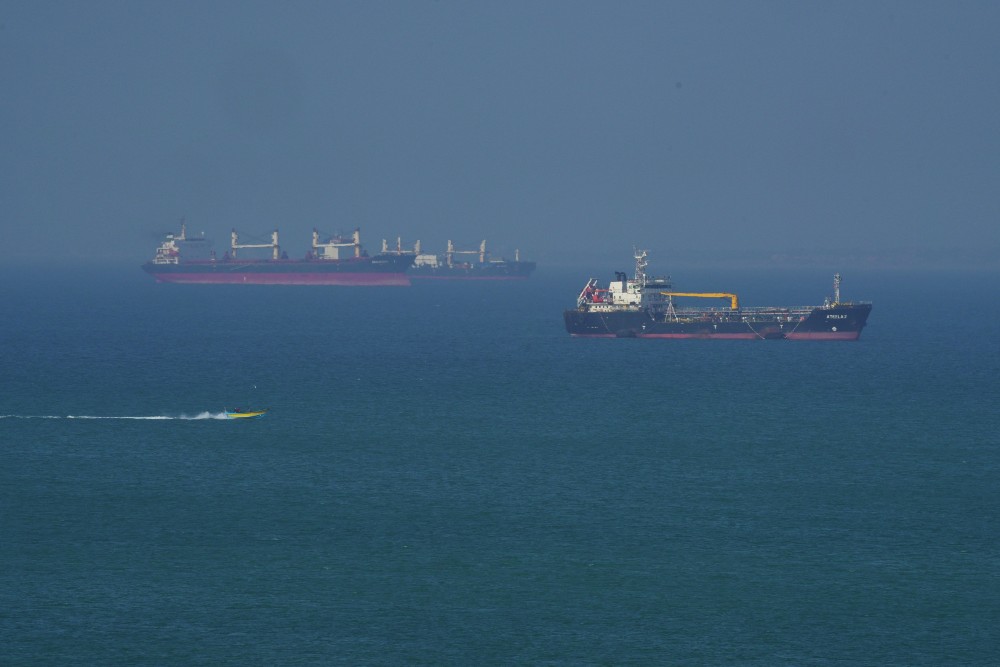
Over 60 days into the Iran war, there is uncertainty around when, and to what degree, the Strait of Hormuz will reopen. What is clear is that the ongoing geopolitical instability has exposed a structural fragility in global consumer goods supply chains: its dependence on fossil fuel energy.
The conflict has delivered one of the largest supply disruptions in the history of the global oil market. For most industries, this is primarily a cost shock. For the apparel and footwear sector, it is something more consequential: an audit of a strategic question facing global manufacturing: has production diversified its energy base, or does it remain exposed to the price and supply volatility of fossil fuels?
The disruption has not been evenly distributed. China, the world’s largest apparel exporter and the single biggest user of oil and gas flows transiting the Strait of Hormuz, has experienced major pressure on trade routes. Yet it is better insulated than many of its peers, as roughly 30 percent of its power mix comes from renewables, functioning as a geopolitical buffer amid the uncertainty.
The contrast with other major manufacturing hubs is stark. Thailand, where more than half of electricity generation depends on LNG and around 40 percent of that is imported from the Middle East, had to declare an emergency energy plan, suspending petroleum exports and ramping up coal output – including lifting its national cap on coal-fired power generation. Bangladesh and Sri Lanka are implementing fuel rationing systems.
The lesson is not subtle. Energy resilience and decarbonization have been proven to be the same investment. Countries and companies that made one have been making the other.
The response to the shock has, in many cases, risked making the long-term decarbonization challenge worse. Cascale’s State of the Industry report revealed in January that the industry is already off-track. But now, coal has become the emergency backstop of choice across Southeast Asia. It is domestically available, does not transit through Hormuz, and can be ramped up quickly.
For brands and investors tracking Scope 3 emissions, this matters enormously. Grid carbon intensity in key manufacturing countries is rising sharply. Factories that have spent years improving their Higg Facility Environmental Module energy scores may see those scores deteriorate through no fault of their own. What looks like backsliding at the factory level is, in reality, a system-level energy failure.
There is a structural irony at the heart of all this. The case for renewable energy investment in manufacturing economies has never been stronger. Solar and wind are cost-competitive with fossil fuels in most markets, and the conflict has made the hidden costs of fossil fuel dependence brutally explicit. Rationally, the response should be a decisive acceleration of renewables.
Instead, the same conditions that strengthen the investment case are undermining the capital environment needed to execute it. Oil price spikes feed inflation. Inflation drives interest rate increases. Higher rates raise the cost of financing. Large-scale renewable projects such as solar parks, wind farms, power purchase agreements, and distributed energy systems are capital-intensive, long-duration investments that are acutely sensitive to the cost of debt.
This is the context in which supply-chain finance moves from optional to essential. Collaborative financing models, where brands co-invest with suppliers in renewable infrastructure and structure repayment against verified energy cost savings, are not new. But the current crisis has made their logic unavoidable. Shared investment, underpinned by credible energy measurement, may be the only mechanism capable of bridging the gap between a compelling economic case and a constrained capital environment.
History suggests that energy shocks rarely leave systems unchanged. The 1973 oil embargo accelerated France’s nuclear program. The Iranian Revolution drove Japan’s energy-efficiency push. Russia’s invasion of Ukraine triggered Europe’s fastest-ever renewable build-out.
The latest shock has a distinctive feature its predecessors lacked: the renewable alternative is already cheaper. Today, the economics are aligned with the security logic. Solar and wind reduce geopolitical exposure and, in most contexts, undercut fossil fuels on cost.
We cannot afford complacency once the crisis fades. Tanker traffic will resume. Prices will eventually normalize. There will be temptation to treat emergency coal deployments as temporary aberrations and defer harder structural investment; that would be a mistake.
The energy transition in apparel manufacturing was already the most consequential and under-executed item on the apparel sector’s sustainability agenda. The conflict has not changed that. It has simply removed any remaining ambiguity about the cost of delay.
The manufacturers that emerge strongest will be those that lock in power purchase agreements, accelerate on-site renewables, and work with brand partners to make co-investment financeable.
**
Jeremy Lardeau is senior vice president of Industry Activation & Growth at Cascale, the global nonprofit alliance empowering collaboration to combat climate change and support decent work in the consumer goods industry.