The idea of “Timeless Britishness” remains a powerful luxury proposition, as seen in Burberry’s turnaround effort led by CEO Joshua Schulman.The idea of “Timeless Britishness” remains a powerful luxury proposition, as seen in Burberry’s turnaround effort led by CEO Joshua Schulman.
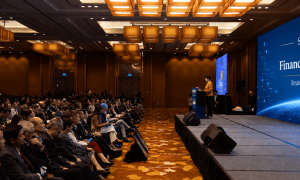
LONDON — The U.K. luxury sector remains optimistic in a new reality that Walpole‘s chief executive officer Helen Brocklebank described as “never normal” as British brands, including Burberry, Selfridges and Fortnum & Mason, gathered at the Londoner hotel by Leicester Square on Monday for this year’s Walpole British Luxury Summit.
Speaking in a room packed with attendees who paid to join the full-day program, Brocklebank framed British luxury, a sector worth 81 billion pounds to the U.K. economy, not as a victim of volatility, but as one of the sectors best placed to shape what comes next.
The wider British luxury industry supports nearly 500,000 skilled, well-paid jobs and generates 56 billion pounds in exports that broadcast British creativity, manufacturing, and service excellence around the globe.
You May Also Like
Brocklebank said investments are flocking to the country to create more high-value craft and design opportunities “for generations to come.”
London is set to see nearly 800 new luxury hotel rooms open this year, the largest increase in over a decade, backed by a 1.1 billion pound fund for new Mayfair properties.
Across the nation, McLaren has drawn sovereign wealth into British engineering in Woking, Bicester, and Sheffield, while Rolls-Royce is investing 300 million pounds to expand its Goodwood home.
Brocklebank also flagged Manchester as a “high-octane luxury growth hot spot,” and underscored the importance of high-value visitors and new markets such as India, where a deep appreciation for craft helps open the door to British brands.

Philipp Ammon/Courtesy
At the heart of the day was the idea that “Timeless Britishness” remains a powerful luxury proposition.
Kicking off the morning session, Joshua Schulman, CEO of Burberry for almost two years, said he took the role because he’d been watching Burberry since the 1990s and saw a powerful brand that had fallen behind in value creation and drifted from its original DNA.
Under previous strategies of “modern British luxury,” he felt the brand had become less recognizable globally and wanted to re‑center it on “timeless British luxury” and a clear sense of Britishness with the Burberry Forward turnaround plan.
At the same time, he has been rebuilding an internal structure where design choices, merchandising, and value creation are tightly looped together.
“One of the things that I’d always found so impressive about Burberry was the link between the creative and commercial alchemy, and it was clear that over many years, that had eroded, and it was very important for me to bring that back,” added Schulman.
On the business side, Schulman revealed that Burberry had a cost structure misaligned with the size of the business, prompting restructuring to restore value creation and simplify decision‑making. For example, he removed the chief commercial officer layer, so regional presidents report directly to him and meet weekly.
He also emphasized the need for resilience in a “dynamic, unpredictable” world, and expressed strong confidence in the team and in a 170‑year‑old brand that has lived through many crises.

Philipp Ammon/ Courtesy
Commencing the afternoon part of the summit, André Maeder, CEO of Selfridges Group, unpacked how the British department store is adding excitement to physical retail with 40 Duke, a new members’ club that combines personal shopping with events and private dining.
“We want to be the most imaginative shop — not store, the most imaginative shop — in the world,” he said, adding that the club concept came two years ago when they needed to figure out what to do with 27,000 square feet of empty offices.
“We said, wow, that’s the right space to do something very special. We started to build last July, and we opened two weeks ago. We have 26 suites and a restaurant with more than 80 seats. We also have an unbelievable terrace overlooking London,” Maeder continued.
Positioning‑wise, Maeder called 40 Duke the ultimate expression of its Selfridges Unlocked loyalty scheme, which is built around collecting digital loyalty points by shopping or checking in at in-store locations. Only around one percent of its top clients, called Very Very Selfridges Person, have unlimited access to the club.
“London is the home of private clubs. We wanted a department store club — with bars, restaurants, private dining, supplier ‘excitements’, art and talks — something that could only really exist here, above Oxford Street,” said Maeder.
Other areas being discussed on stage during the summit included an outlook for the next chapter of the U.K.-U.S. special relationship for luxury featuring Fortnum & Mason CEO Tom Athron, how macroeconomics and geopolitics impact luxury, why experience is luxury’s fastest growth vertical, insight into the behaviours and expectations of ultra high net worth individuals, and how AI is shaping the customer journey.