The United States federal budget could expand by a whopping $1.1 trillion over the next decade due to recent evolutions in trade policy.The United States federal budget could expand by a whopping $1.1 trillion over the next decade due to recent evolutions in trade policy.
Skip to main content

Kevin Dietsch / Getty Images
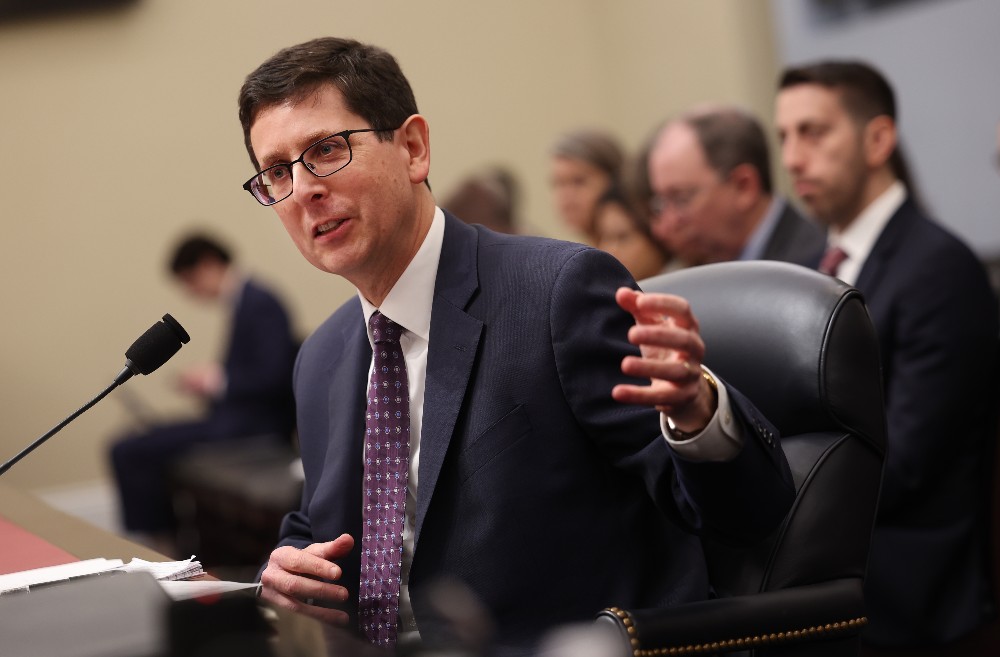
The United States federal budget could expand by a whopping $1.1 trillion over the next decade due to recent evolutions in trade policy, according to the director of the Congressional Budget Office.
CBO chief Phillip Swagel, who appeared on Bloomberg Television on Monday, said the recent invalidation of President Donald Trump’s International Emergency Economic Powers Act (IEEPA) tariffs in the Supreme Court will add $2 trillion to the deficit on its own over the course of the next 10 years. The administration’s recent efforts to reconstitute those duties using other statutes like Section 122 and Section 301—if they stick—will bring in between $800-$900 billion, or “just shy of half” of what was lost due to the IEEPA decision.
“The deficit over 10 years would be about $1.1 trillion higher because of the net of the Supreme Court taking away some tariffs, the administration putting back some,” he explained.
“The administration has a lot of authority to impose new tariffs and change them around,” he added. Given the mercurial nature of these policies, Swagel said the CBO isn’t comfortable making an official long-term prediction of what the tariff impacts will look like.
In the near-term, though, the ebb and flow of duties isn’t helping most Americans. With the tariffs contributing to higher prices last year, the administration tried to revive the economy through tax cuts. However, the economic gains driven by those decreased rates have been all but canceled out by rising energy costs due to the war that has been raging in Iran since late February.
“It looks like the higher energy prices affecting households is roughly offsetting the benefits” of tax breaks, Swagel said. “There’s of course effects on business investment and effects on inflation and all that is in mix. We haven’t had to do another budget update, so we haven’t done the economic forecast yet that would underpin that.”
ad