A Korean American novelist returns to Seoul, the city of her birth, to dissect the global passion for K-cultureA Korean American novelist returns to Seoul, the city of her birth, to dissect the global passion for K-culture
When I meet Patrick Lee, director of art behemoth Frieze Seoul, the first café he proposes we try has vanished, its façade demolished. “This café was just here,” he says, disoriented but not at all surprised. “It was here the last time I was on this street. You see, this is what happens in Seoul.” In the city’s vibrant historical centre, hanoks – the traditional curved-roofed wooden houses that give Seoul its distinctive, heart-stopping skyline – are jammed next to sleek art galleries, fashionable glasses shops and pop-up boutiques. And my God, the cafés. How to convey the love for coffee in this high-octane, thrilling city of late-night barbershops and 4am Tuesday karaoke? Seoul bursts with, at some estimates, more than 15,000 cafés, many of them freshly opened, and the number keeps escalating.


Lee and I grab coffee from a different café, then queue outside Art Sonje Center, which has been one of the city’s most influential private art museums since it was founded in 1998. An exhibition of an astonishing post-apocalyptic installation by Argentine Peruvian artist Adrián Villar Rojas has visitors entering at timed intervals. While Lee and I talk, locals and tourists bustle past. People from both categories are dressed in hanboks, the sumptuous, intensely colourful traditional clothing of Korea, full skirts shaped like upside-down blown-glass flowers, pants billowing. Some of the locals are having engagement photos taken. The tourists, says Lee, dress up, in part, because shops in the neighbourhood often give discounts to anyone clad in a rented hanbok.

“We are blessed with a society that values its culture,” he says. Increasingly, the rest of the world values South Korean culture too. You’ve probably encountered a significant aspect of it in the past week, if not today. Your children could be dancing and singing along to KPop Demon Hunters, the most-viewed Netflix film of all time. Four years after it first aired, nothing has topped Squid Game as the most-watched Netflix TV show in the world. Your aunt might be learning Hangul, the Korean alphabet, so that she can follow her K-dramas more closely; and half of your brother’s prized skincare products could be Korean. Restaurants across the world are slathering their food with gochujang, a thick red chilli paste foundational to Korean cuisine. Frieze, the important contemporary art fair that takes place annually in New York, Los Angeles and London, launched in Seoul in 2022. The profile of Korean literature keeps rising higher, including but not limited to the fiction of 2024 Nobel Prize winner Han Kang. This rapid ascent of Korean culture throughout the world, known as hallyu or the Korean Wave, draws ever more travellers to the country, and particularly Seoul.


It wasn’t long ago, though, that South Korea was one of the poorest countries in the world. In 1953, after the ravages of the Korean War and 35 years of colonisation, it had a per capita gross national income of £49. Even recently, it could be hard for someone like me, a Korean American writer, to find much Anglophone literature written by other Koreans. What has driven the sweeping change?

For one thing, since South Korea is so small, there’s a relatively limited domestic market. “There are a lot of changes and a lot of competition. Maybe that’s why travellers find this place so dynamic and exciting,” says Mingoo Kang, the Michelin-spangled chef and owner of Mingles, one of Seoul’s most lauded and inventive restaurants. He’s widely praised not only for his dishes but also for his work as an ambassador for Korean food; accordingly, we’re having lunch at Hansung Kalguksu, a casual restaurant in upscale Gangnam that specialises in a knife-cut noodle dish called kalguksu. It’s a go-to for Kang, and he orders a feast so lavish that even I, used as I am to the large spreads that can come as part of a Korean meal, can barely get a taste of every outrageously flavour-packed dish. And the abundance keeps growing: the waiter brings more food, including a plate of noodles and octopus in a rich, creamy gochujang sauce. Afterwards, Kang and I head for Gyeongdong Market, one of his favourite places to buy ingredients for Mingles. It’s outdoors, with entire stalls devoted to, for instance, robust, gloriously pungent varieties of jang – fermented pastes and sauces. Vendors call out, suggesting we try their goods, their voices jovial in spite of the winter cold. Several seem to know Kang well.


I walk through Seoul to Leeum Museum of Art, on a slight hill in a stylish and especially art-rich part of art-loving Seoul. Obsessed as I am with Leeum’s extraordinary permanent collection of Korean ceramics, I’m also heading to the museum for a big survey exhibition of the work of Lee Bul, one of Korea’s leading sculptors, and an artist I’ve long admired. The exhibition surpasses my already elevated expectations, bringing together decades of works that range from a large-scale mirrored installation to a giant metallic airship. A sizeable portion of Lee’s sculptures refer to difficult events from Korea’s complicated history, but the atmosphere is lively and festive, with small children staring open-mouthed at the visually stunning pieces.

In the past century, the country has been colonised, heavily bombed, ripped in two by foreign countries and ruled by dictators. On a tour of most historical sites in Seoul, the guide is likely to impart as much about what’s gone – usually pillaged or destroyed – as about what’s there, the absences markedly present. The gaps are there in the gorgeous, vast Gyeongbokgung Palace. Though first established in 1395, it was entirely burnt down during a prolonged and devastating 16th-century invasion, rebuilt, largely plundered in the 1900s, then rebuilt again, all of which in no way diminishes the former royal palace’s singular beauty.


This loss partly explains some Koreans’ desire to make their culture known, a desire that extends to the state level. Hallyu has some of its roots in a government commitment since 1998 to investing in and spreading Korean art, film, music, television and food around the world. It isn’t just about making a profit. It’s also the hunger and pride of a people who, over and over, almost lost everything, and want to do what they can to make sure it never happens again. By “they” I also mean “we”, for that’s part of what drives me, as it does so many Koreans I know, whether in Seoul, the city of my birth, or in San Francisco, where I live. I want to do right by the Koreans who, preceding me, cleared obstacles, and to open more possibilities for those coming after me. Or as Kang says, when I ask about his hopes for the future: “Our parents’ generation sacrificed for us, so I want to make a road for others.”

The crowd skews towards the youthful in Seongsu-dong, a trendy, formerly industrial neighbourhood so hectic that on weekends, car traffic is restricted. There’s a pop-up shopping complex built out of 200 vividly blue shipping containers, the largest such construction in the world. A former rice mill has been turned into a café and exhibition space. I’ve gone there to meet Ha Ji-Won, a well-known actor in Korea for the past 20 years, artist and founder of a new skincare line, Pouch24.

I first encountered Ha in the wildly popular 2010 K-drama Secret Garden. While we stroll through Seongsu-dong – dropping in at one of the city’s multitude of photobooths to try on costume hats and plastic glasses, and eating soft, delicate, strawberry-filled confections at rice cake shop Hanjungsun – people glance at Ha, nudging one another and taking photos. One person, perhaps a teenager, has been following us for a short while, sneaking photos from behind. At one point, they lose enough control to run up to Ha. They say, helplessly, “You’re so beautiful” in Korean, before rushing off.


As Ha and I talk about why aspects of Korean culture have resonated so broadly, she touches on how much people work. Things are shifting, but school in Korea is infamously challenging. As a result of this pressure, Ha suggests, Korean artists and entertainers might be especially disposed towards pouring their feelings into their creations. “This emotional authenticity and intensity could be part of what connects with audiences around the world.”

But as might be obvious by now, Koreans can also play hard, and I go to Gangnam to meet a friend at a bar. Seoul is large. The subway ride is long and crowded, but somehow tranquil. No one talks loudly, or plays music on speakers. The first bar, Alice Cheongdam, is a Lewis Carroll-themed speakeasy lounge, where I have an exquisite spring-green drink of elderflower, vodka and aloe vera before moving on to the acclaimed Zest, a sustainable bar serving a slew of unforgettable cocktails. My friend and I are taking part in the over-the-top yet common tradition of “cars”: we go through “il-cha, i-cha, sam-cha”, or “first car, second car, third car” and so on, each car being a different stop during the evening. As Koreans frequently do, I end the night at one of the city’s many jjimjilbangs, or bathhouses, in this case the nearby Prima Spa. Since I grew up in a predominantly Korean part of Los Angeles, jjimjilbangs aren’t new to me – this one, though, is especially Edenic. I’m thinking of something Lee said: “Korean art, culture: it’s not overnight, it’s not just hot.” While that might be the impression abroad, he added, the reality is that a lot more people are being exposed to what’s been thriving and growing here for a long time.


The next morning, I go to a stunning hanok on a hill in Insa-dong to meet Lucia Cho, who leads Hwayo, a company that produces premium soju, a Korean spirit. Cho, whose work spans Korean ceramics, restaurants and more, has thought deeply about the current demand for Korean culture. “We need to think about how long it’s going to last, why it’s popular and what we are trying to be popular for,” she says. The night before, it snowed for the first time all winter, and I have a dazzling view of snow-striped hanok roofs, low-slung swoops of tile giving way to shining high-rises – the most magnificent of cityscapes. The sun is out, the light reflecting, splintering. Remember this, I tell myself, trying to hold onto the intensity. For all the ways I can find pieces of Korea outside of Seoul, there’s nothing like being here.

Seoul Searching
Gangnam District
Mingoo Kang’s sublime restaurant Mingles mixes tradition with innovative techniques and global influences. A broad offering of Korean alcohol accompanies everything, and the signature dessert brings together the three traditional jangs – fermented pastes – of Korean cuisine (a trio that Kang identifies as the soul of Korean food in his cookbook, Jang). Nearby, my -favourite Korean barbecue place, Byeokje Galbi the Cheongdam, specialises in snow-marbled hanwoo beef from the most prized of Korean cattle. The sirloin and galbi – marinated ribs – are standouts, as are the Pyeongyang-style cold buckwheat noodles. It’s best to leave space for buttermilk ice cream. Hansung Kalguksu offers incredible knife-cut-noodle soups; octopus in gochujang sauce; oyster and courgette jeon – small pancakes; and beef brisket. Koreans might work hard but are good at letting loose too. Zest bar relies on locally grown products for its drinks (I recommend the Daiquiri No 6 and fizzing Men-Ge Mule). Alice Cheongdam down the street is a Lewis Carroll-themed speakeasy. Nights can get late in Seoul, and it’s not uncommon for locals to go from drinking to a bathhouse. Prima Spa is beautiful. Seoul is also a destination for skincare. Sulwhasoo’s flagship shop offers a selection of many Koreans’ favourite high-end brands (and an excellent spa). Repic Clinic has an array of up-to-date skin treatments.


Jongno District
Southeast of Gyeongbokgung Palace is Insa-dong, a picturesque neighbourhood with hanoks, those traditional Korean houses. Within walking distance are many art museums and galleries, restaurants, cafés and teahouses. I like to visit Kukje Gallery, Art Sonje Center and the main branch of the National Museum of Modern and Contemporary Art to see the latest exhibitions. For lunch or dinner, A Flower Blossom on the Rice serves plant-centric food made from farm-sourced organic ingredients. I like to stop at CCOT for its strawberry bingsu, or shaved ice. West of Gyeongbokgung Palace is Onjium, a unique Korean restaurant and cultural research institute reviving traditional recipes. Nearby, set in a hanok, is Bar Cham, with drinks based on traditional spirits and indigenous ingredients, and Ilsangyeoback, a prized ceramics shop. For more ceramics, the KwangJuYo brand is available in Shinsegae department stores.
.jpg)
Seongsu-dong is an energetic neighbourhood full of boutiques, cafés and people. Seoul Forest is best during cherry blossom season and in autumn, when the ginkgo trees have burst into gold. My favourite dumpling soup (apart from my mother’s) is from Amamri. It’s a tiny place run by one woman and can be difficult to find but it’s at 13 Seoulsup 2-gil. Noryangjin-dong has Seoul’s massive Noryangjin Fisheries Wholesale Market, where visitors can browse, feast or both.

Hannam-dong is a good area for shopping as well as a long visit to the formidable Leeum Museum of Art. Sensational art continues at nearby Lehmann Maupin and Pace Gallery Seoul. For a coffee break, cocktail or both, in the adjacent neighbourhood, Itaewon-dong, it’s best to stop at the charming Hit Coffee Roasters.
Mr Ahn’s Craft Makgeolli is a banju restaurant – its exceptional food is designed to pair with flights of makgeolli: creamy, sparkling rice wine.

Where to sleep
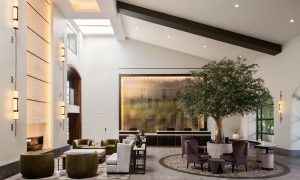
Josun Palace, a Luxury Collection Hotel, Seoul Gangnam – a 36-storey tower in the slick Gangnam neighbourhood – exudes stylised, cinematic glamour with art-filled green-and-gilt interiors and sweeping city views. Its concierges can book a variety of tables in the city, but its Michelin-starred progressive Korean restaurant, Eatanic Garden, is one of the best in the country. Park Hyatt Seoul is a little Scandinavian and a bit Zen. Light, airy rooms and high ceilings let guests catch their breath in the whirl of the city; pale oak finishes and heavy marble worktops are grounding. Gangnam’s best restaurants and the luxurious Galleria Department Store aren’t far. Moxy Seoul, Myeongdong is an ideal bare-bones base in its bustling namesake neighbourhood. The neon-lit property has rooms for everyone, including quad bunk set-ups for intrepid friend groups who don’t mind getting cosy. The Westin Josun Seoul promises easy access to the Deoksugung and Gyeongbokgung Palaces, and offers a touch of tradition while ticking all the boxes: heavenly beds, a large gym, a stellar pool and spa, and a killer East-West buffet.