Fashion

“It’s Optimism for Futurism”: Ambush’s Yoon Ahn Gives Barbie Her Own Humanoid Twist

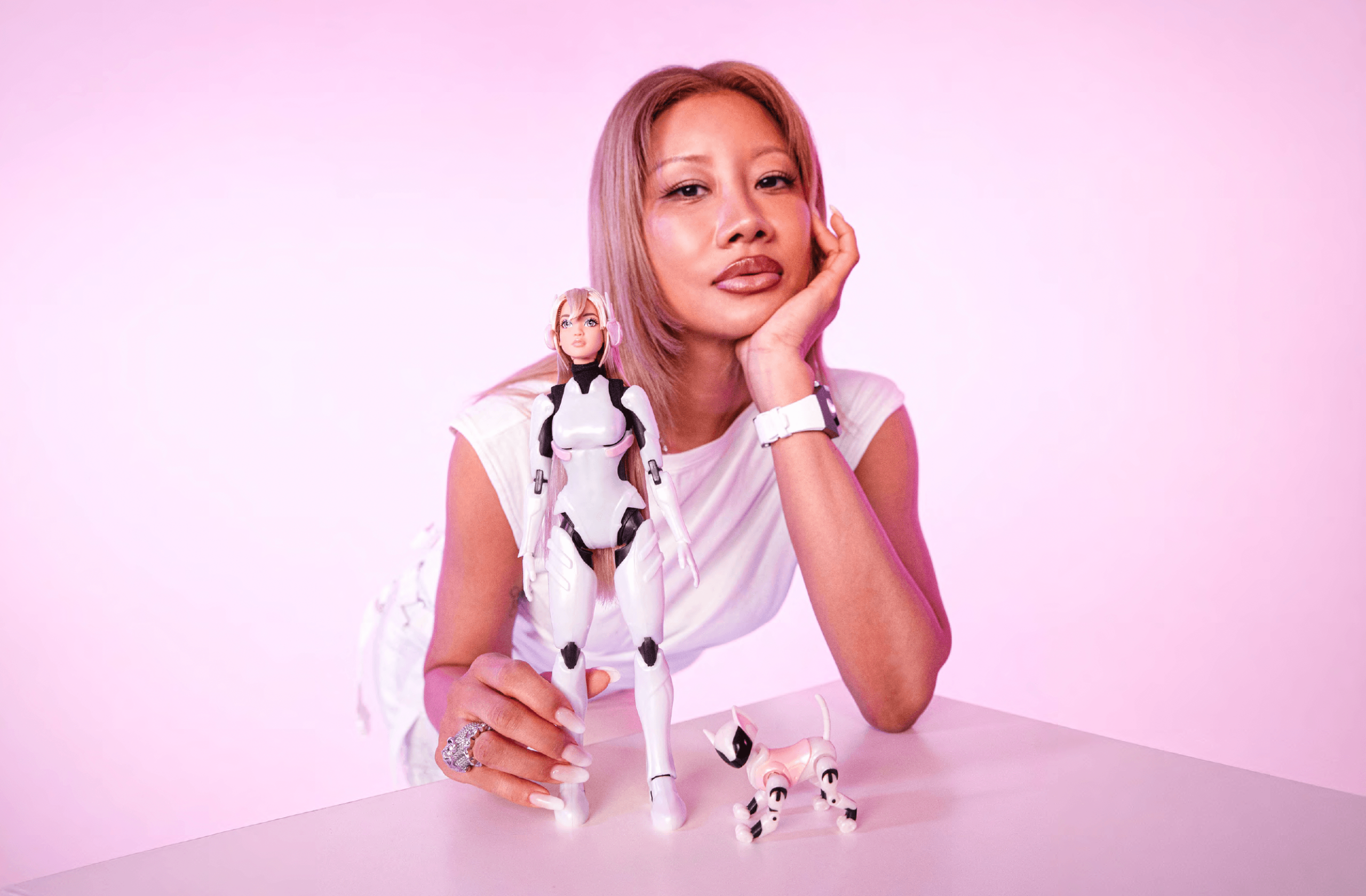
Prototype 001 isn’t like other Barbies—she’s a robo-babe with a blonde hime haircut, a pink headset, silver body armor, and a cyborg cat companion.​Prototype 001 isn’t like other Barbies—she’s a robo-babe with a blonde hime haircut, a pink headset, silver body armor, and a cyborg cat companion. 

Image may contain Kaila Yu Person Body Part Finger Hand Figurine Face Head and Toy
Photo: Mattel

Ambush designer Yoon Ahn wasn’t really a Barbie girl growing up. She received them as presents, as many children have since the toy’s inception in 1959, but her primary interest lay in Legos—the instructions, the engineering, and the act of building. Still, it was Barbie that hinted at her future as a disruptive fashion designer. “When it came to Barbie, I think I became a little more creative by trying to change their character by cutting the hair, cutting up the outfits,” Ahn says over Zoom from Tokyo. “Instead of playing with what was given to me, I was always just being kind of imaginative.” When Mattel approached Ahn three years ago to design her own Barbie, she immediately decided that it would have to be just as subversive as the unsolicited haircuts she gave her own dolls in her youth.

“I looked at the other collaboration designers, and it’s always been some sort of likeness of them, with the brand outfit and everything,” says Ahn. “I wanted to leave a stamp that reflects the world-building we’ve done as a brand, but not in a literal form of fashion.” Ahn’s Barbie is neither one of the classic reprisals we saw during the 2023 press tour for Greta Gerwig’s film nor a vintage Y2K It kid. She’s a robo-babe—dubbed Prototype 001—with a blonde hime haircut, a pink headset, silver body armor, and a cyborg cat companion.

Image may contain Figurine Adult Person and Toy
Photo: Mattel

The ensemble draws inspiration via an assortment of sources, including the character uniforms from anime TV shows and sci-fi movies as well as her favorite contemporary artist, Mariko Mori. “Her work often explores the themes of technology, spirituality, and transcendence,” explains Ahn. “It was also kind of my headspace of, What does it mean to be human and humanoid at the same time? This is where we’re going with everything. In the history of Mattel, it’s probably the first humanoid Barbie.”

When Sega Toys first launched iDog, an adorable retro-futuristic robot canine that could play all of your favorite tunes, in 2005, the introduction of such technology to children’s toys felt exciting. The innocuous trinket was a technological step up from baby dolls you could feed and diaper-change, as well as a precursor to the integrated family-friendly Wii gaming console that Nintendo introduced just a year later. Things have gotten a tinge darker since then. Semi-life-size humanoids currently range from mildly meme-able (see: the recent clips where they’re competing in track meets and slamming into very obvious walls) to deeply disconcerting, like when they’re official guests at the White House.

Image may contain Camilla d'Errico Kate Beaton Figurine Person Adult Toy Doll Face and Head
Photo: Mattel

But the bumbling bots don’t freak the designer out: “If you really think about it, some people have started to behave like bots anyways,” she says. “How is that different from humanoids?” Their eventual involvement in actual human life, Yoon says, is inevitable, and their purpose—especially when it comes to toys and fashion—is still up for debate. That’s why during the design process, the designer has asked herself: What is the idea of a toy in future children’s lives, and how could we make that positive? Ahn’s out-of-the-box approach doesn’t come from a place of negativity, but rather, like iDog, it’s a signifier of cool technological and sartorial possibilities. “It’s optimism for futurism,” she concludes.


Most Popular

To Top