After years of increased representation, female directors are all but missing from the Venice Film Festival’s main competition. Here’s how we got here—and what needs to change.After years of increased representation, female directors are all but missing from the Venice Film Festival’s main competition. Here’s how we got here—and what needs to change.

Out of the various talking points that emerged from this year’s Venice Film Festival line-up announcement—most pressingly, where were the Oscar contenders previously rumored to be heading to the Lido?—there is one I’ve found deeply concerning: the 2026 competition roster features only one film by a woman director. This is Danish-Egyptian filmmaker May el-Toukhy’s Woman Unknown, the tale of a housemaid on the precipice of marrying her wealthy, widowed employer. The 19 other movies in contention for the Golden Lion are all helmed by men.
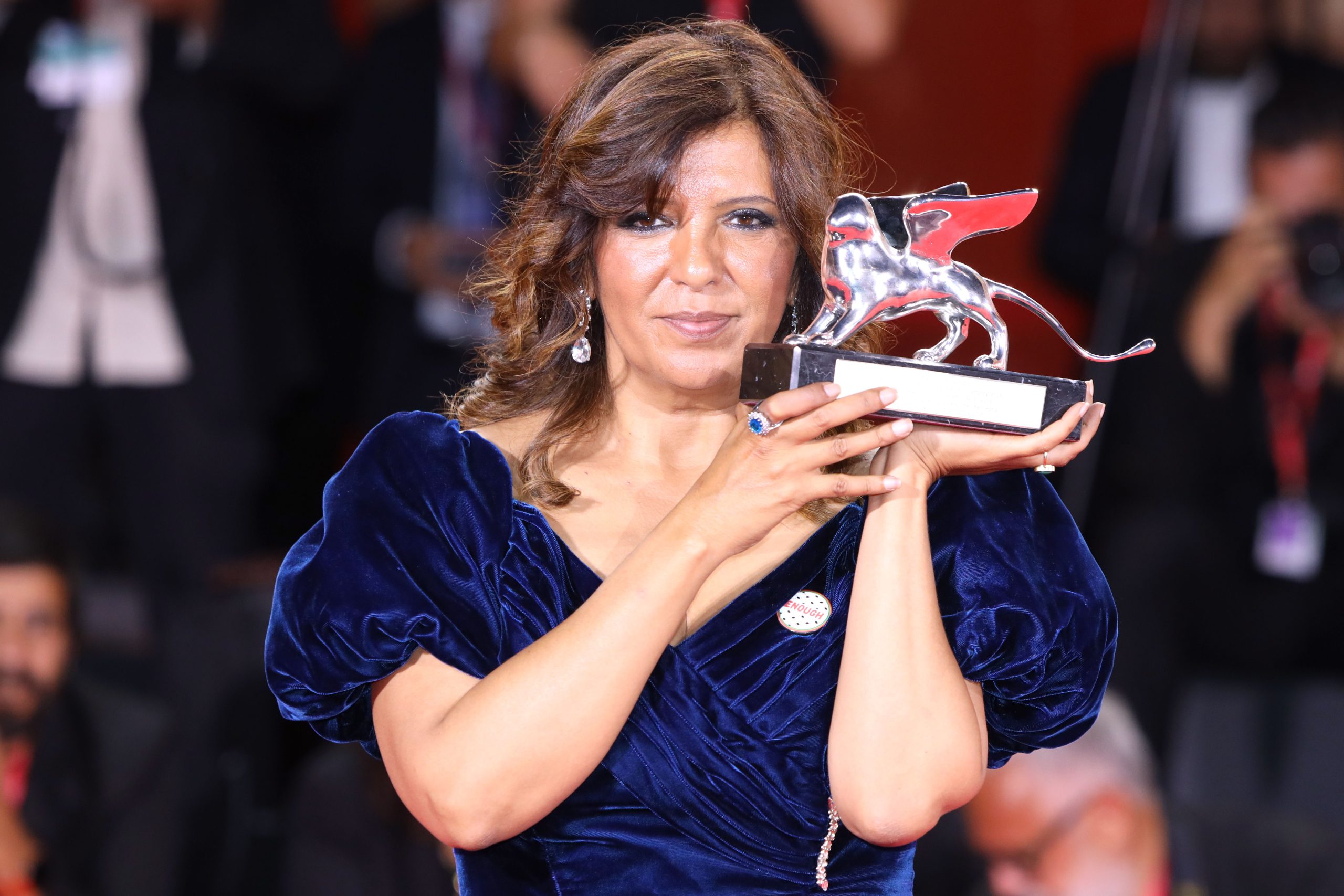
This marks a sharp decline from previous iterations of the showcase. Just last year, there were six women in the 21-strong competition line-up, including Kaouther Ben Hania, who took home Venice’s second-place Grand Jury prize for The Voice of Hind Rajab. There were six women-directed films in 2024, too; five each in 2023, 2022, and 2021; and a whopping eight in 2020.
The issue, I think, is not that women aren’t making enough great, highly deserving films or submitting them to Venice—the Orizzonti roster makes it clear that they are—but rather, that many of these films are not being viewed as worthy of inclusion in the main competition, long the domain of the revered male auteur (this year, you’ll find Martin McDonagh, Danny Boyle, Hirokazu Kore-eda, Lee Chang-dong, Florian Zeller, and Werner Herzog on this list).
Let’s tackle the question of quality head-on: having attended the Venice Film Festival for the past few years, I have, I promise you, seen many, many very bad movies by legendary male directors. Last year, Noah Baumbach’s Jay Kelly, László Nemes’s Orphan, and Benny Safdie’s The Smashing Machine were all in competition. The year before that, Todd Phillips’s endlessly maligned Joker: Folie à Deux was in contention for the Golden Lion, for crying out loud. For the biggest names, particularly those that have an existing relationship with the festival, the bar to enter the competition is, it seems to me at least, notably lower. Are any of the women-directed projects that could’ve made it into the competition this year and didn’t really worse than those (sorry) clangers?
In the end, all of this is, of course, subjective—boundary-pushing cinema has always been divisive. But then, does that mean more women need to be part of the selection process for Venice’s main competition? If Barbera continues to reject the prospect of quotas ensuring female representation, how do we avoid backsliding our way to a male-dominated status quo?
The answer, I believe, is with sustained scrutiny and pressure—the same spirited and continuous discourse that has brought about the progress we’ve seen over the past decade. It’s often when significant steps have been taken towards a fairer system that a kind of complacency sometimes sets in, and that is the position Venice appears to be in. But Barbera has now been quizzed about the dearth of women directors by every major film publication. A number of Italian film organizations have criticized the line-up. And more outrage will surely follow once the festival kicks off in September. It’s crucial that it does, so that this subject remains top of mind for Barbera ahead of his putting together the 2027 roster.
Here’s hoping that this year will act as a warning; a glimpse of what might happen if we take our foot off the gas. In 2026, after so much historic erasure and only a handful of recent, hard-fought wins, it’s just unfathomable that a festival like Venice can have only one woman-directed film in competition. And it must, categorically, never happen again.