It’s become one of Europe’s most LGBTQ+-friendly destinationsIt’s become one of Europe’s most LGBTQ+-friendly destinations
How Valencia came to host this summer’s Gay Games
 Visit Valencia
The Spanish city has become one of Europe’s most gay-friendly destinations. Now, it’s welcoming the world this summer to host the world’s largest LGBTQ+ sporting event.
During a nighttime rowing practice last spring, our crew stopped in the middle of a split and our nine-person racing shell drifted towards the Valencia Marina. As we caught our breath, someone from the all-queer rowing group asked, “Is anyone competing in the Gay Games?”
Despite being an LGBTQ+ athlete living in the Spanish city where this year’s competition is held, I had never heard of the Gay Games. But after my fellow rowers told me about the world’s largest international LGBTQ+ sporting event, I was immediately inspired to enter.
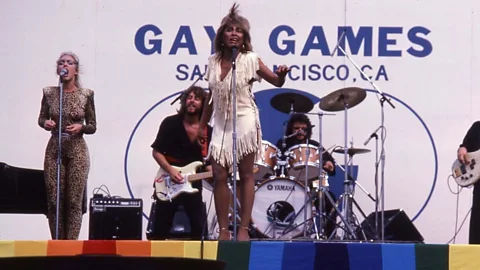
Founded by former Olympic decathlete Tom Waddell in 1982, the Gay Games take place every four years in a different city and essentially serve as the Olympics for LGBTQ+ athletes. Waddell created the Games after noticing how much sexism and homophobia there was when he competed at the 1968 Summer Olympics in Mexico City as a closeted gay man. When Waddell came out in 1976, he wanted to create a space for fellow gay athletes to compete free from prejudice and judgment. Six years later, he launched the Gay Games in San Francisco, and Tina Turner performed at the opening ceremony.
 Getty Images
Since the inaugural competition, the Gay Games have been held in places known for their cultural tolerance, such as Amsterdam, New York, Sydney and Paris. Spain’s third-largest city will be hosting from 27 June to 4 July 2026 – and while Valencia might be best known for its paella, beaches and mix of Art Nouveau architecture and contemporary design, it’s also one of Europe’s most queer-friendly places.
I moved to Spain from the United States in 2022 specifically because of its tolerant culture. The nation has some of the most progressive same-sex marriage and anti-discrimination laws in the world, and last month, it overtook Malta as Europe’s top nation for LGBTQ+ rights, according to the ILGA (International Lesbian, Gay, Bisexual, Trans and Intersex Association).
Between Torremolinos; Chueca, Madrid; Barcelona’s Eixample district (affectionately known as “Gaixample”), and many other areas, Spain has no shortage of long-established queer-friendly hubs. But while it may not have as many explicitly gay clubs as in Spain’s two larger cities, Valencia’s famously laid-back culture and “live-and-let-live” attitude fosters a broad culture of acceptance that’s subtly woven into the city’s fabric.
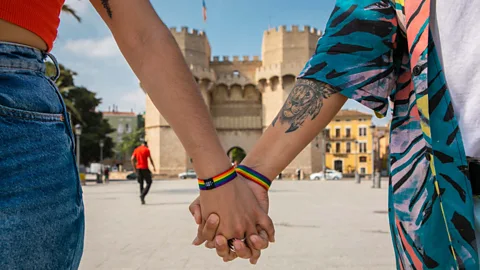
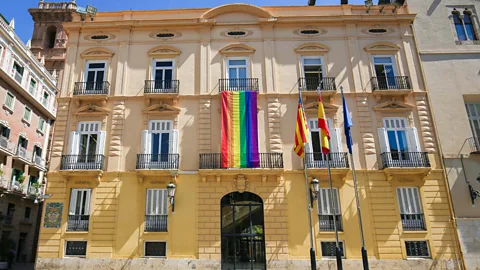
It’s common to see same-sex couples kissing and holding hands in the city’s narrow, medieval streets. Rainbow flags and stickers are displayed on storefronts. Places like clothing-optional Pinedo beach are queer havens where families are also welcome. And nearly 50 years since the city’s first Pride Festival attracted a few thousand people, it now draws more than 20,000, with LGBTQ+ booking site misterB&B reporting a 58% booking surge in accommodations for this year’s 20 June celebration compared to last year’s event.
 Alamy
AlamyWith Pride and this summer’s Gay Games just a week apart, Valencia is keen to showcase its culture of acceptance to the world.
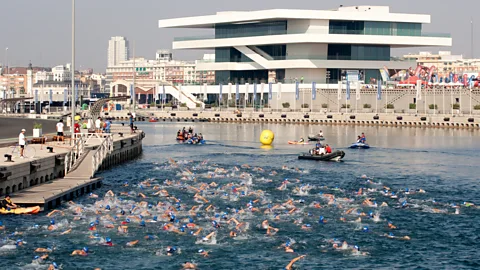
According to David Gómez from Visit Valencia, more than 9,000 athletes from 75 countries will compete in 39 sports at the competition, attracting an estimated 40,000 spectators. While the Games will be held across the city, each of the 46 competition venues is within a short bike, metro, bus or taxi ride from the Gay Games Village at the Jardín del Túria, one of Spain’s largest urban parks.
“In 10 minutes, you’ll be at the furthest [venue],” said Gay Games sports coordinator Déborah Giaoui, adding that the city contains more than 200km of bike paths laid across mostly flat terrain.
On 27 June, the day of the opening ceremony, there will be a public 3K International Rainbow Memorial Run through the Jardín del Túria.
 Alamy
AlamyExploring Valencia’s LGBTQ+ scene
During the Gay Games, the city will be filled with events catering to all types of people, including the opening ceremony on June 27, which will feature a parade of nations, a lighting ceremony and live performances. At the historic City Museum (Museu de la Ciutat), a “Contemporary Artistic Identities” exhibit will run throughout the games showcasing works from eight local LGBTQ+ artists and sculptors. The closing aquatics party, Pink Flamingo, will be held on 3 July and will feature synchronised water performances. Visitors of all stripes will likely hear the Choral Festival on 30 June, as hundreds of voices will be singing famous pop songs in unison.
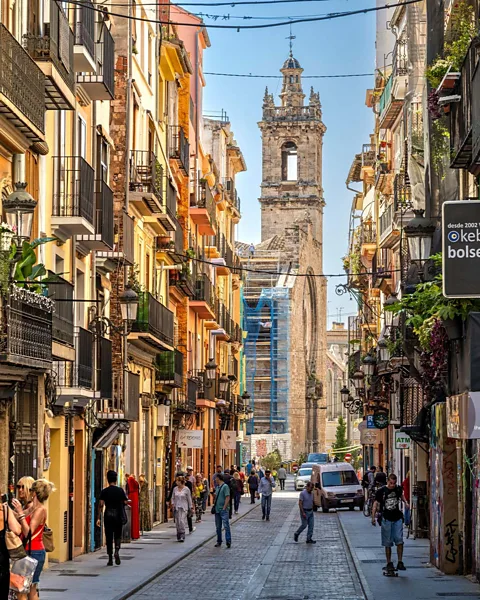
Beyond the Games, Valencia’s LGBTQ+ scene is expanding, and worth exploring. The city’s most famous LGBQT+-friendly district is arguably Barrio del Carmen in the city’s Old Town. After Spanish dictator Francisco Franco died in 1975 and homosexuality was decriminalised four years later, artists and queer individuals began moving into the formerly dilapidated neighbourhood. The punk scene helped further establish the area as a queer refuge, with clubs like Radio City and Peter Rock Club catering to counterculture crowds.
Walking through Carmen’s narrow, maze-like, car-free streets, you’ll notice many queer-owned and queer-friendly places. The recently opened Axel Hotel Valencia (a straight-friendly Spanish hotel chain) is a great place to base yourself. Nearby, spots like La Carmen VLC, Trapezzio Café and El Cafetín are easygoing gay bars where drinks are sometimes accompanied by a piano show. For a more energetic scene, check out Café de las Horas housed inside a baroque landmark where the city’s iconic Agua de Valencia cocktail became popular among travellers. Other bars, like the bear haven BUBU, are within walking distance.
Just south of Carmen is Valencia’s other famous gay-friendly district, Ruzafa. Historically a hub for immigrants from Arabic countries, recent years have seen an influx of LGBTQ+-owned shops and restaurants. Queer travellers should wander past its colourful Art Nouveau and Art Deco buildings towards the corner of Sueca and Dénia streets – which locals affectionately call Cantó de les Mariques (“Corner of the Queers”) because LGBTQ+ people would discreetly meet or cruise when homosexuality was forbidden during the Franco era.
 Alamy
AlamyHere, outdoor tables spill out of restaurants and cafes while a rainbow flag sits at the COMIC café proudly waving at passersby. Just a few streets down, La Boba y El Gato Rancio is a relaxed queer-owned bar. You can find more energy (and a younger crowd) at places like Templo and the lesbian favourite, Las Vegas – all of which is an easy seven-minute bike ride or 20-minute bus ride from the Gay Games Village.
“COMIC Café has grown within the community, living peacefully with its neighbours here in Ruzafa,” said the cafe’s owner, Carlos Soler. “At first, COMIC was only a point of reference for our community, but over the years, other open-minded bars joined in, allowing the space to remain safe and free for our community.” When asked about why Valencia was the perfect city for the Gay Games, Soler said, “First, because we have the Mediterranean Sea, a good climate, tons of sports infrastructure, and everyone here is already open-minded.”
More like this:
Gómez added, “For Valencia, the Gay Games represent much more than hosting an international sporting event. They are an opportunity to reinforce the city’s identity as an open, inclusive and welcoming destination, where diversity is part of everyday life.”
For those of us participating, the Games are as much about competition as camaraderie.
 Visit Valencia
“I expect a safe and fun environment, but also a competitive one. Above all, I hope to see a massive sense of collective unity,” said Nerea Forcadell, who will be competing in the dragon boat race.
Moving to a place where I never feel judged and finding a community of LGBTQ+ rowers has allowed me to embrace my identity as a queer athlete. Part of that is thanks to Valencia’s climate of acceptance, and the other part is thanks to people like Waddell who fought for something I can enjoy freely today. Fifty years after he came out and had the vision to create the Gay Games, I can proudly compete and be who I am without shame or fear.
—
If you liked this story, sign up for The Essential List newsletter – a handpicked selection of features, videos and can’t-miss news, delivered to your inbox twice a week.