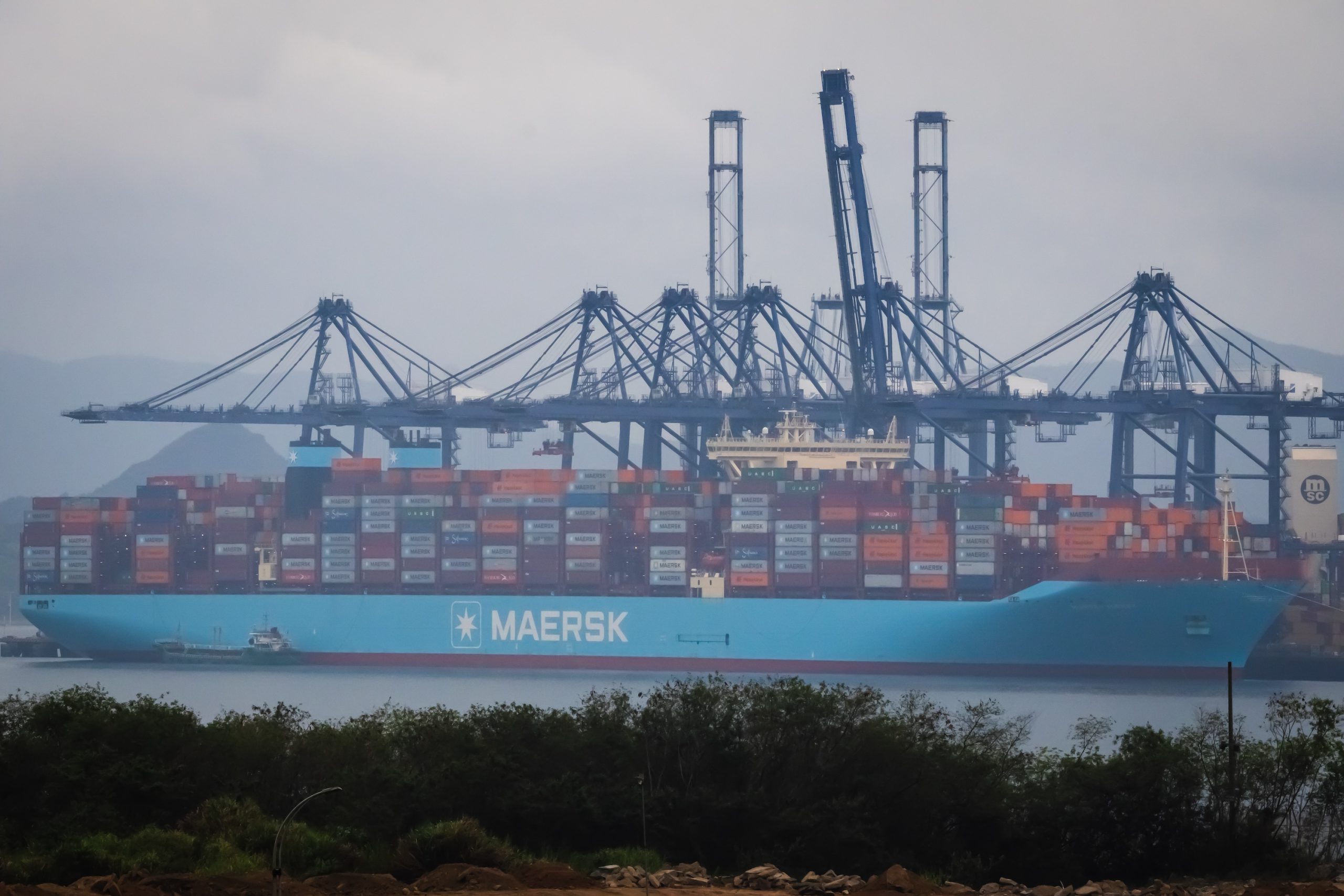
The carrier is passing added costs to customers through surcharges and higher spot rates, and warns the pressure will continue in Q2.The carrier is passing added costs to customers through surcharges and higher spot rates, and warns the pressure will continue in Q2.
Maersk says it must find a way to pass through $500 million in extra monthly costs to customers amid escalating fuel prices since the start of the war in Iran.
However, CEO Vincent Clerc says the ocean carrier has been recovering the added costs in full through higher spot freight rates and surcharges for contracted customers, ensuring the company has thus far incurred a “limited financial impact” from the conflict.
This enabled Maersk to maintain its full-year financial guidance, which forecasts an operating profit ranging between a $1.5 billion loss and $1 billion in income.
Since the outbreak of the war in late February, spot rates have increased 40 percent on average, Clerc said, which “has been roughly in line with the cost increase we have faced.”
Clerc said the increased costs will flow through in the second quarter and beyond.
“The cost impact of this energy shock is unprecedented both in terms of size, the speed at which it has unfolded and the dislocations it has created in the market,” said Clerc in a first quarter earnings call Thursday morning. “If these elevated bunker prices persist, which seems likely, we will expect to deploy more slow steaming to reduce the cost impact.”
The company says it has responded to fuel shortages in parts of its network, primarily in Asia, by redistributing available fuel from North America and Europe to ensure that vessels can refuel before departing again.
Oil prices soared through March and April after Iranian forces imposed stricter controls over maritime shipping in the Strait of Hormuz, effectively closing a passage that hosts about 20 percent of the world’s oil and natural gas supply daily.
That action has spooked shipping companies from sailing through the conduit for fear of being attacked. According to Clerc, Maersk currently has six owned and chartered vessels that are still stuck in the Persian Gulf.
One Maersk-owned vehicle carrier was safely guided through the Hormuz strait on Monday after the U.S. launched a military effort to escort ships through. That short-lived initiative was paused Wednesday.
The situation in the Strait of Hormuz also impacted operations in the Red Sea and Bab el-Mandeb Strait, with Clerc confirming that Maersk reversed and halted its anticipated gradual return to the Red Sea for safety reasons since the start of the Middle East hostilities.
“We have a review ongoing right now where we’re assessing…whether we feel that we should also restart the return of some of our services through the Red Sea,” Clerc said. “There’s no doubt that we have a bit of a different threshold than especially some of the competitors that are going through the Bab el-Mandeb today. Those companies have had issues in the Strait of Hormuz and have had either people being detained or people getting injured because they took some different chances than we did.”
Clerc said the one limiting factor to a Red Sea return was the limited availability of either escort ships or monitoring assets from the U.S. Navy or any European naval force.
“That could free tonnage that we could reinvest into slow steaming opportunities for the services that cannot return immediately,” Clerc said.
The CEO also chimed in on Amazon’s expansion of its supply chain services to all businesses, noting that the container shipping firm isn’t concerned about the move and any impacts to its own contract logistics division.
“We don’t see that at all as being threatening to what we’re doing,” said Clerc. “We are active much more on the international scene, where they are active much more on the U.S. domestic scene. We are not so active in the express and last-mile delivery compared to what they are.”
Clerc echoed comments from GXO CEO Patrick Kelleher, saying that many Maersk customers have “serious qualms” about committing their data to Amazon’s systems.
For the first quarter, Maersk generated revenue of $13 billion, down 2.6 percent from the year prior, but surpassing analysts’ expectations of $12.5 billion compiled by LSEG.
The decline was driven by downward pressure in year-over-year average freight rates, which decreased 14 percent from the first quarter of 2025.
The ocean carrier’s net income totaled $100 million, down substantially from $1.2 billion to kick off last year.
Asian exports helped Maersk’s ocean freight volumes rise 9 percent from the year prior to 3.2 million 40-foot equivalent units. Sequentially, volumes sank 5 percent.
Maersk has seen no impact on demand level from the war in Iran, with Clerc noting that volumes moved are already back to pre-war levels.